Lorem ipsum dolor sit amet, consectetur adipiscing elit. Ut elit tellus, luctus nec ullamcorper mattis, pulvinar dapibus leo.
Click Here
Swedish Air Force Targets 10-Minute Gripen Turnaround Standard with Hot Rearming
Swedish Air Force Targets 10-Minute Gripen Turnaround Standard with Hot Rearming
Swedish Air Force Targets 10-Minute Gripen Turnaround Standard with Hot Rearming
Jarryd Sinovich
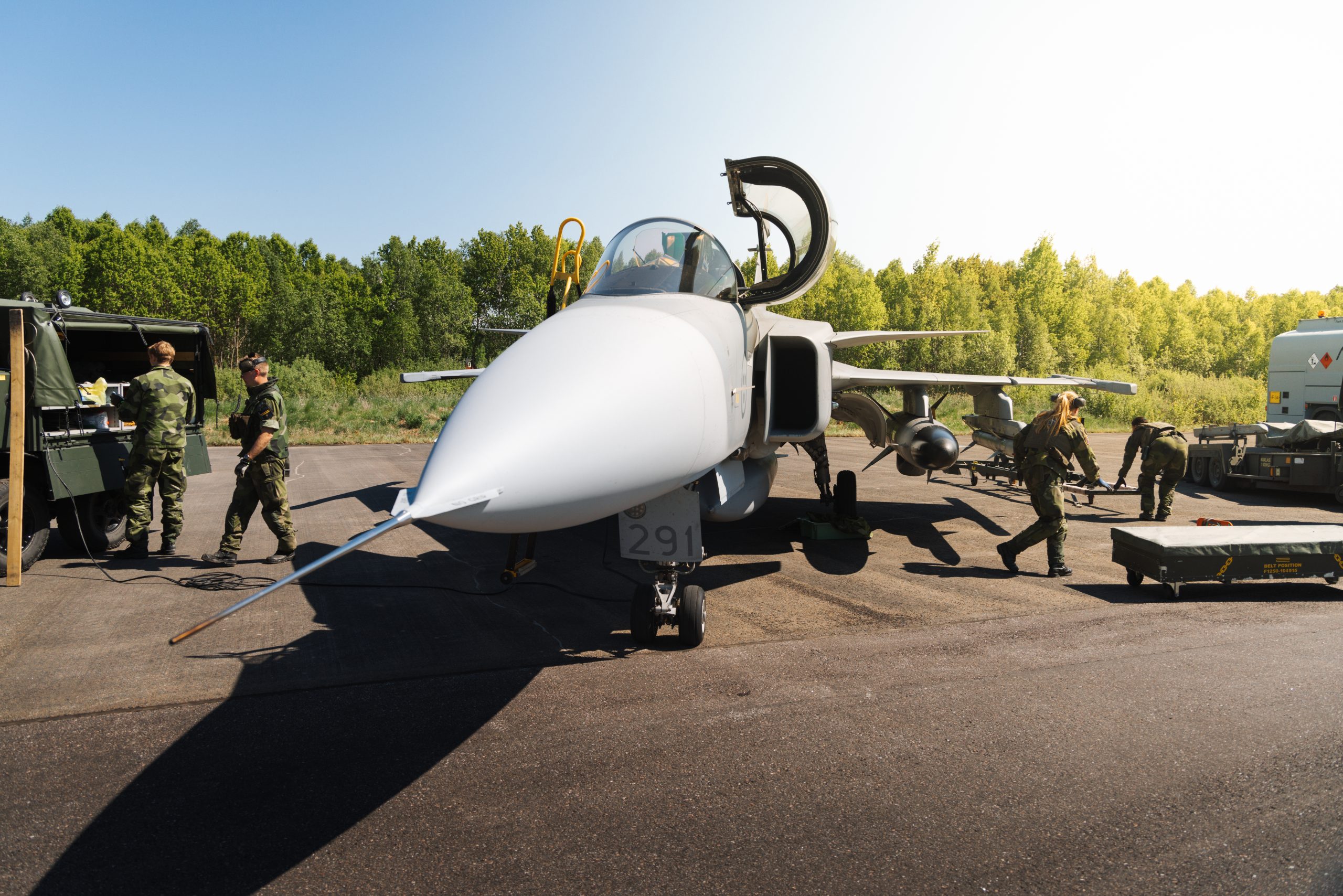
The Swedish Air Force is moving to reduce the ground turnaround window for its Saab JAS 39 Gripen multirole fighters from 15 minutes down to just 10 minutes. Under the new target standard, a dispersed ground crew will execute a complete refuel, rearm and pre-flight check while keeping aircraft availability at peak operational tempos during dispersed combat operations.
Swedish Air Force Commander Major General Jonas Wikman announced the initiative, noting that the shortened preparation cycle will rely on expanding hot turnaround procedures. While hot refuelling—replenishing fuel tanks while the fighter’s engine remains running—is already routine operational practice within Swedish wings, the service is actively integrating hot rearming to reload kinetic ordnance without shutting down propulsion or primary aircraft systems.
Remarkably, these turnaround operations are executed by lean, highly mobile ground units comprising just one regular technical officer and five conscript mechanics. Saab designed the JAS 39 Gripen from its inception for rapid maintenance in austere field conditions, incorporating accessible avionics bays, modular subsystems and built-in test routines to minimize specialized ground support equipment.
However, operational analysts emphasize that the Gripen’s agile turnaround capability relies on more than platform design alone. The rapid regeneration model is supported by Sweden’s national dispersed basing doctrine, evolved from the Cold War Bas 90 framework. This distributed infrastructure network links main operational bases with reinforced road strips, auxiliary highway runways, hardened aircraft shelters and distributed prepositioned depots holding munitions, spare parts and fuel.
The development carries operational relevance for international operators evaluating dispersed air combat strategies. For future Gripen operators seeking to replicate Sweden’s distributed basing doctrine and 10-minute generation cycles, success will depend heavily on sustained capital investment in distributed ground support infrastructure, mobile logistics convoys and specialized technical training across both career personnel and conscript support units.
Share:
Facebook
Twitter
Pinterest
LinkedIn
NEWSLETTER
Subscribe to our newsletter for new blog posts, tips and news