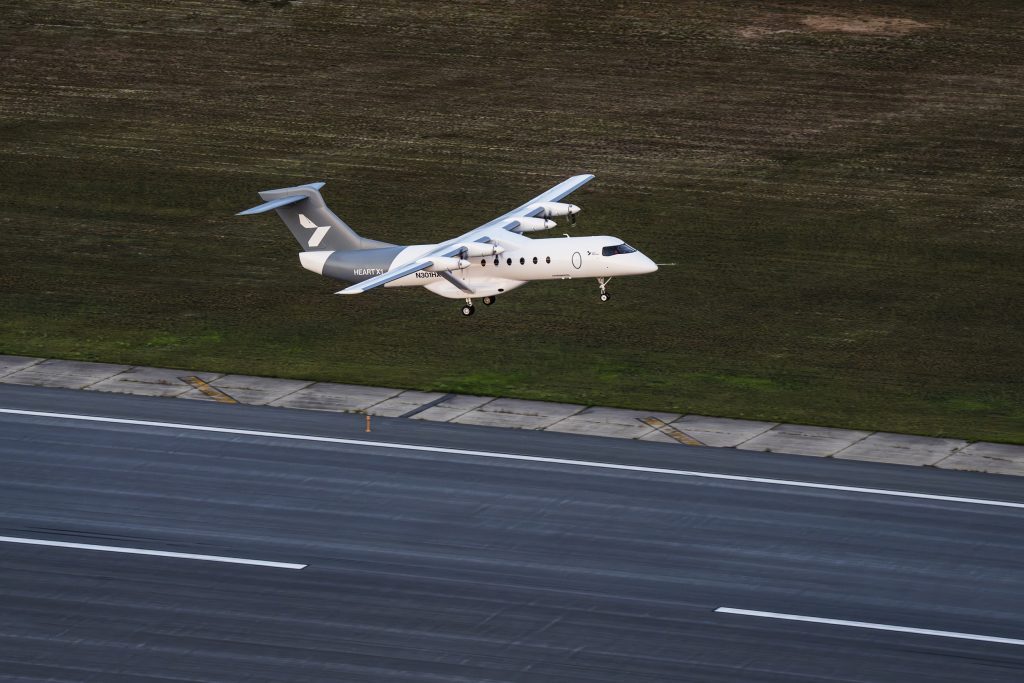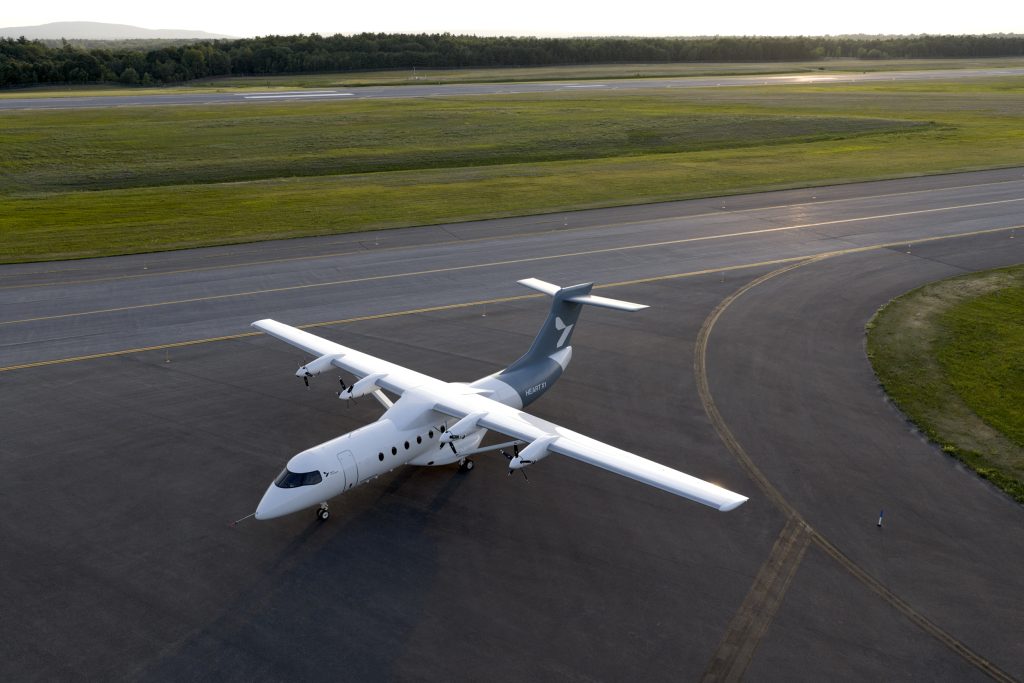

Heart Aerospace has successfully completed the first flight of its X1 demonstrator aircraft, marking a significant milestone in the development of electric commercial aviation.
The X1 took to the skies on 12 August 2026 from Heart Aerospace’s flight-test base at Plattsburgh International Airport in New York. With a wingspan of 106 feet, a length of 76 feet and a take-off weight exceeding 25,000 pounds, the aircraft is now the largest battery-electric aircraft ever flown.
The piloted flight lasted 27 minutes and saw the X1 reach an altitude of 1,100 feet above ground level. During the flight its all-electric propulsion system delivered more than one megawatt of power.
The test was conducted under an FAA Special Airworthiness Certificate in the Experimental Category. The flight profile included taxiing, take-off, climb, manoeuvring and landing with the mission designed to demonstrate all-electric flight at a scale relevant to future commercial airline operations.
One of the most notable aspects of the flight was the amount of energy consumed. Powered entirely by batteries, the X1 used approximately US$5 worth of electricity during its first flight. While the figure represents a short experimental flight rather than a direct comparison with airline operations, it highlights the potential for electric propulsion to significantly reduce energy costs for future aircraft.
“With the first flight of X1, Heart Aerospace has demonstrated electric flight at the scale of a commercial airliner,” said Anders Forslund, Founder and CEO of Heart Aerospace.
Forslund said electric commercial aircraft have the potential to reshape airline economics while supporting more affordable and frequent air services to airports closer to communities.
Developing the ES-30
The X1 is a full-scale demonstrator designed to validate technologies, aerodynamics and flight performance that will support Heart Aerospace’s ES-30 production aircraft.
The ES-30 is being developed as a 30-seat hybrid-electric regional airliner and is intended to be certified under FAA Part 25 regulations. Heart is targeting entry into service for the aircraft in 2031.
The programme has attracted significant interest from the airline industry with commitments from United Airlines, Air Canada and JSX.
United Airlines has supported the development of the ES-30 and welcomed the X1 first flight as an important technical milestone.
“Electric commercial aircraft have real potential to deliver a better travel experience for passengers while strengthening our business,” said Michael Leskinen, Chief Financial Officer of United Airlines.
Air Canada has also invested in Heart Aerospace and the ES-30 programme as part of its efforts to support emerging aviation technologies.
Lower operating costs
Heart Aerospace believes the ES-30 could reduce aircraft operating costs by more than 40% compared with legacy regional aircraft.
The company attributes the potential reduction to lower energy costs, simplified electric propulsion systems, reduced maintenance requirements and improved aircraft availability.
Further improvements in battery technology could increase the economic advantage of electric propulsion over time. Heart also expects the ES-30 to have lower exposure to emissions-related aviation taxes and fees as such measures become more widespread.
The X1 programme is therefore more than a demonstration of electric flight. It is intended to provide Heart Aerospace with practical experience across the development cycle of a commercial aircraft including design, construction, testing and operation.
“Through the X1 program, Heart has built the capability to design, build, test, operate and continuously improve a clean-sheet electric commercial aircraft,” said Ben Stabler, Chief Technology Officer at Heart Aerospace.
Towards commercial flight
Heart is now developing the first pre-production ES-30 at its pilot manufacturing facility in Los Angeles. Flight testing of the ES-30 is scheduled to begin in 2028 with entry into commercial service targeted for 2031.
The X1 first flight represents an important step in that programme. Although the transition from a demonstrator to a certified commercial aircraft will require further testing, development and certification, the successful flight demonstrates that battery-electric propulsion can be applied to an aircraft approaching the scale of a regional airliner.
For regional aviation, where short sectors and smaller aircraft are common, electric and hybrid-electric propulsion could eventually offer airlines an alternative to conventional turboprop and regional jet aircraft.
The success of the X1 will now allow Heart Aerospace to gather further flight-test data as it continues development of the ES-30. If the programme reaches its targeted entry into service date, the aircraft could become one of the first commercial airliners to combine electric propulsion with conventional energy sources on a meaningful scale.