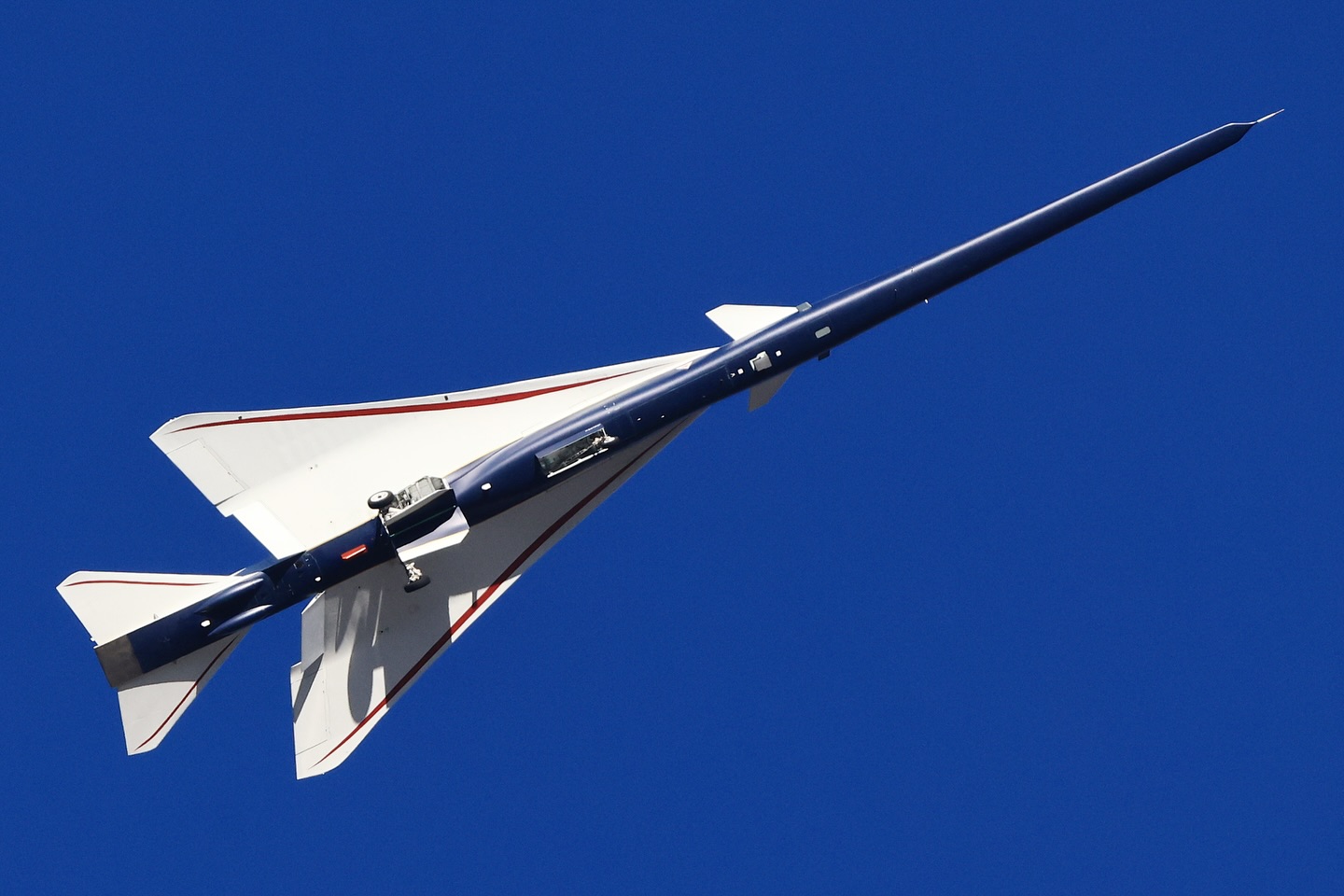

NASA’s experimental X-59 QueSST (Quiet SuperSonic Technology) has officially taken to the skies for the first time, marking a major milestone in the quest to make supersonic flight over populated areas a reality. Unlike traditional supersonic aircraft, which generate loud and disruptive sonic booms, the X-59 has been carefully designed to produce little-to-no sonic boom, a breakthrough that could transform the future of commercial aviation.
The aircraft’s long, slender fuselage and uniquely shaped nose work together with specialized flight surfaces to control the shockwaves that typically cause the boom. By redirecting and softening these pressure waves, the X-59 promises a quiet supersonic experience that could one day allow passengers to fly faster than the speed of sound without disturbing people on the ground.
Following its initial flight, the X-59 will embark on a series of test missions over U.S. cities to gather critical data. These flights will measure noise levels and the aircraft’s performance under real-world conditions, providing engineers and regulators with the evidence needed to validate the design. The results will help shape regulations and lay the groundwork for a new generation of supersonic airliners capable of flying over land at high speeds.

NASA’s X-59 program represents a collaboration between government and industry aimed at overcoming one of aviation’s most persistent challenges: how to combine speed with community-friendly operations. If successful, the technology could open the door to faster intercontinental travel, shrinking flight times while maintaining acceptable noise levels for those living below flight paths.
With its first successful flight complete, the X-59 QueSST now moves from concept to reality. For the aviation world, this represents a pivotal step toward quiet, efficient, and commercially viable supersonic travel—a dream decades in the making that may soon reshape the way the world flies.