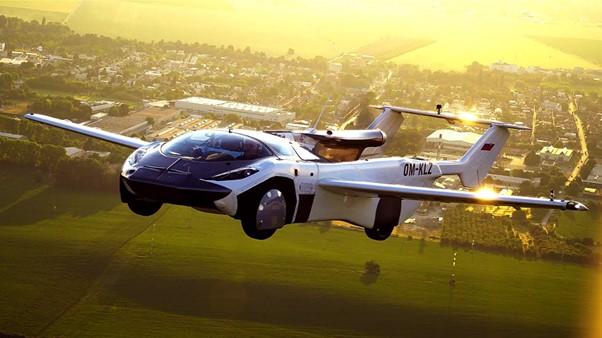

A flying car capable of hitting speeds over 100mph (160kmh) and altitudes above 8,000ft (2,500m) has been issued with a ‘Certificate Of Airworthiness’ (COA) by the Slovak Transport Authority. The future is here…
The hybrid car-aircraft, AirCar, is equipped with a BMW engine and runs on regular petrol-pump fuel. To transform from car into aircraft takes just two minutes and 15 seconds.
The certification comes after 70 hours of flight testing and more than 200 take-offs and landings.
“AirCar certification opens the door for mass production of very efficient flying cars,” said its creator, Prof Stefan Klein of Klein-Vision.
“It is official and the final confirmation of our ability to change mid-distance travel forever.”
In June 2020, the flying car completed a 35-minute flight between international airports in Nitra and Bratislava, Slovakia. The company plans to fly to London from Paris in the near future.
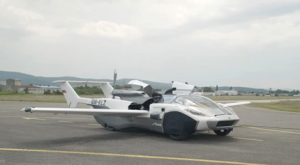
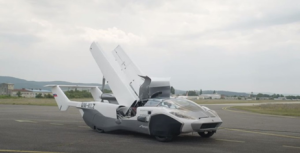
The Klein-Vision ‘AirCar’ has the ability to unfold/fold its wings to enable it to drive or fly as necessaryDr Steve Wright, senior research fellow in avionics and aircraft systems, at the University of the West of England, said the news was “a good step down the road” for the company and made him “cautiously optimistic that I am going to see a few AirCars one day “.
But Dr Wright is cautious about how much mass appeal flying cars may have.
“Are flying cars the future? Yes… and no,” he said.
“The personal-transport revolution is definitely coming but not really looking like this.
“From a transport point of view, it has a niche – although, a very interesting niche.”
The AirCar takes off and lands like a conventional plane and requires a pilot’s license to fly.
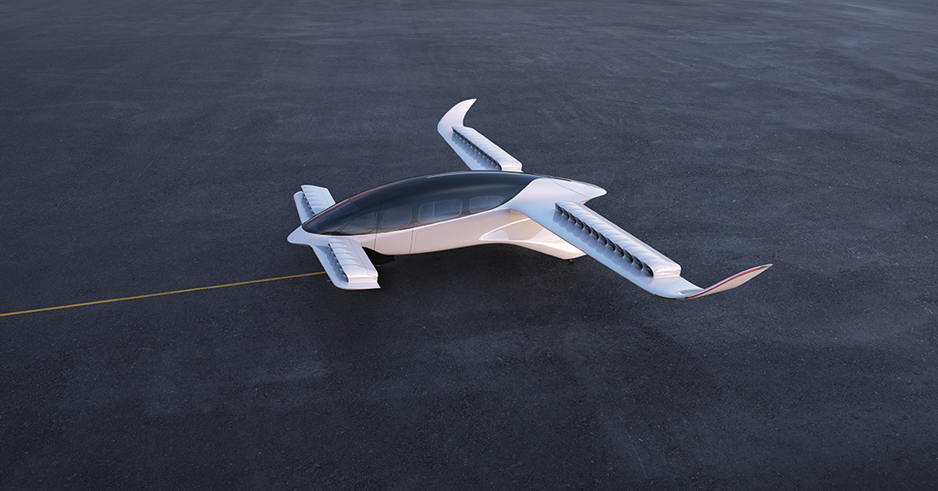
A number of companies are working on unpiloted air-taxi services with autonomous flight and vertical landing and take-off.
PAL – V ‘Liberty’
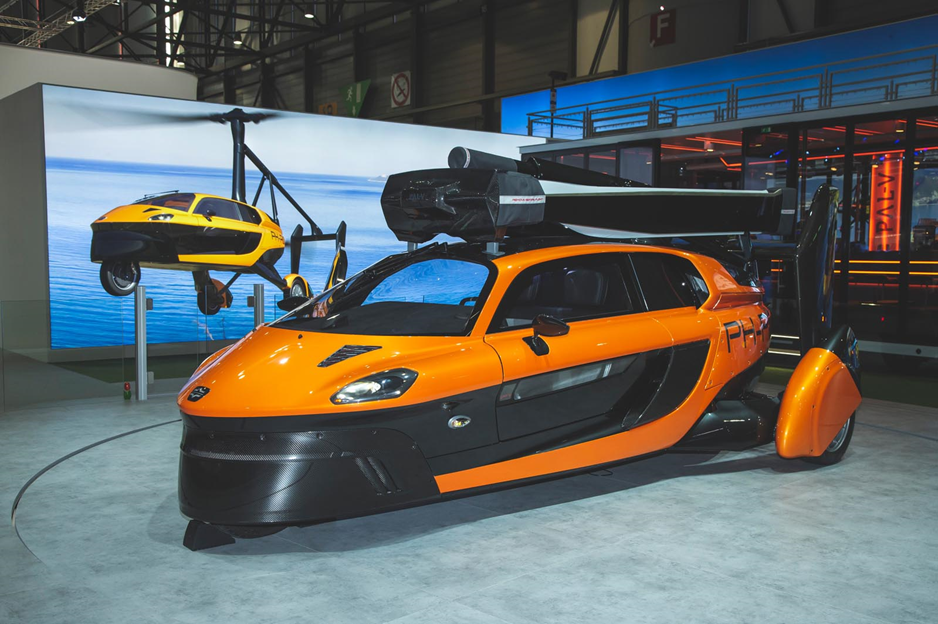
The three-wheeled PAL-V Liberty, which flies like a gyrocopter, is road legal in Europe and is also working towards European Union Aviation Safety Agency certification. The Pal V-Liberty is a combination of a car and an autogyro, or gyroplane under development by PAL-V. Both a driver’s license and an autogyro pilot’s license are required to operate the vehicle.
“The gyroplane principle not only provides us with a safe and easy-to-operate flying car but it also enables us to make it compact and within existing regulations, which is the most important factor to build a useable flying car,” said Mike Stekelenburg, Chief Engineer at PAL-V.
Boeing
On Monday, Boeing announced it was investing an additional $450m (£334m) into Wisk, the California-based autonomous-air-taxi company it owns with Kitty Hawk, a company launched by Google co-founder Larry Page.
Wisk is one of dozens of electric vertical takeoff and landing (eVTOL) makers but differs in focusing its efforts on autonomous flight.
“Our view is that is the big strategic advantage of Wisk, going straight to a self-flying aircraft, building those principles in at every level of the design and development,” said Boeing’s Chief Strategy Officer Marc Allen.
The decision to leapfrog a generation of piloted eVTOL aircraft being developed by independent startups and some aerospace groups entails a later entry to service than the target date of 2024 envisaged by most competitors.
Boeing declined to give a date for what it terms the sixth-generation Wisk passenger vehicle, but industry sources said the idea was to present it for certification in around 2028.
Boeing said it would be the first autonomous passenger-carrying vehicle to be certified in the United States. Boeing owns an undisclosed majority stake in Wisk.
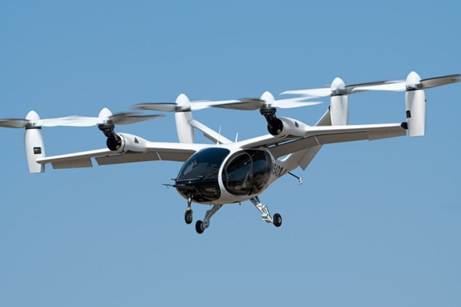
The Joby S4 is already flying. 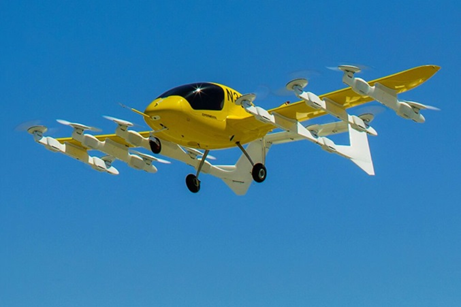
The Proposed Boeing/Wisk hybrid.
THE FUTURE
Promoters hope that hybrid aircars will be a convenient and flexible form of transport – and as a result some are attracting significant investment.
Analysts say the timetable for certification remains the key source of uncertainty surrounding the industry, whose debuts also include California-based Joby and Archer, and from Europe, rivals Lilium and Vertical Aerospace.