Lorem ipsum dolor sit amet, consectetur adipiscing elit. Ut elit tellus, luctus nec ullamcorper mattis, pulvinar dapibus leo.
Click Here
Airbus Unveils U145: Autonomous Heavy-Payload Variant of the Proven H145
Airbus Unveils U145: Autonomous Heavy-Payload Variant of the Proven H145
Airbus Unveils U145: Autonomous Heavy-Payload Variant of the Proven H145
Jarryd Sinovich
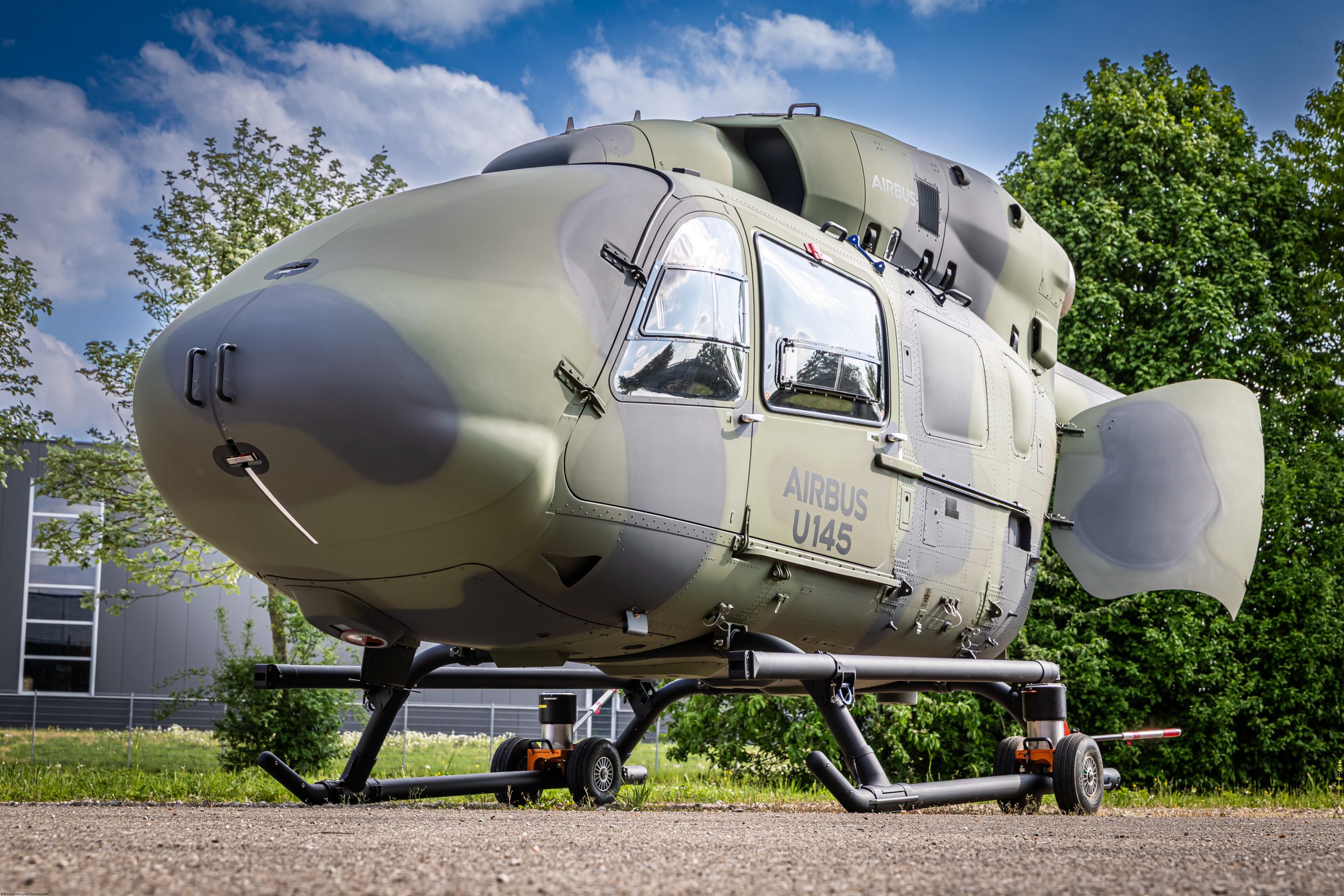
Airbus Helicopters has officially introduced an uncrewed version of its highly successful twin-engine platform, designated the U145. Unveiled as a full-scale mock-up at the ILA Berlin airshow, this heavy-payload Uncrewed Aerial System (UAS) is designed to operate autonomously across high-threat, logistically challenging civil and military environments. A maiden flight with a safety pilot onboard is scheduled for late 2026, with full entry into service projected for the early 2030s.
The U145 combines the structural reliability, lifting power and payload capacity of the baseline H145 airframe with advanced autonomous mission software. Matthieu Louvot, CEO of Airbus Helicopters, noted that the platform combines the proven airframe, power and useful load of the H145 with the autonomy of a UAS. To further develop its capabilities as a multi-mission UAS, the company is teaming up with leading autonomous mission partners to expand the UAS ecosystem in Europe.
The most striking departure from the standard helicopter is the complete removal of the physical cockpit. This omission optimizes internal volume for logistics, allowing for significant adaptations such as an integrated nose door with a foldable loading table and a reinforced cargo floor. Equipped with a specialized sensor suite and artificial intelligence for full autonomy, the U145 retains the dual Safran Arriel 2E engines and full authority digital engine control (FADEC) that anchor the crewed fleet.
Featuring a Maximum Take-Off Weight (MTOW) of 3 800 kg, the platform is engineered as a mission-agnostic asset. While primarily focused on high-volume autonomous cargo resupply, its modular layout allows rapid configuration for disaster management, firefighting, surveillance and Manned-Unmanned Teaming (MUM-T). Furthermore, Airbus is partnering with MBDA to explore armed scouting roles and drone mothership functionality to deploy air-launched effects.
The U145 represents Airbus’s second major crewed-to-uncrewed conversion, building on the experience gained from the VSR700 program. The development benefits from a global technological footprint; in the United States, Airbus U.S. Space & Defense has partnered with Shield AI, L3Harris and Parry Labs to offer a localized, fully autonomous variant designated the MQ-72C to the US Marine Corps. With more than 1 800 H145 family helicopters currently active worldwide across military and parapublic sectors, this uncrewed evolution leverages an established global support infrastructure. The U145 enters the market boasting the lowest acoustic footprint and carbon emissions in its class, offering a mature, survivable option for modern forces seeking to extend their distributed logistics and tactical capabilities without risking aircrew.
Share:
Facebook
Twitter
Pinterest
LinkedIn
NEWSLETTER
Subscribe to our newsletter for new blog posts, tips and news