Lorem ipsum dolor sit amet, consectetur adipiscing elit. Ut elit tellus, luctus nec ullamcorper mattis, pulvinar dapibus leo.
Click Here
Boeing’s T-7A Red Hawk Cleared for Low-Rate Initial Production
Boeing’s T-7A Red Hawk Cleared for Low-Rate Initial Production
Boeing’s T-7A Red Hawk Cleared for Low-Rate Initial Production
Jarryd Sinovich
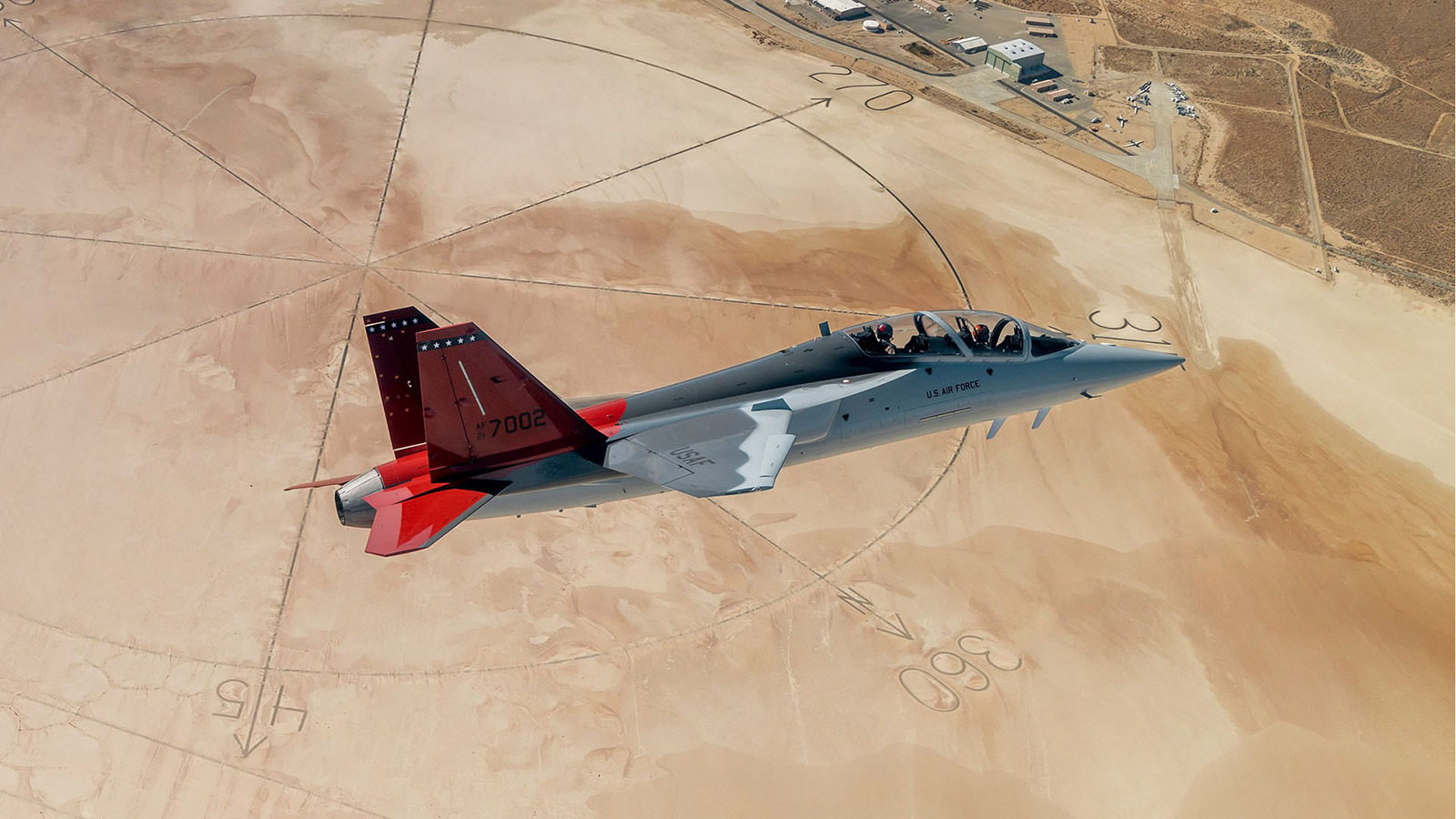
The U.S. Air Force has announced that Boeing’s T-7A Red Hawk has achieved Milestone C in its development lifecycle clearing the advanced jet trainer to enter low-rate initial production (LRIP).
The milestone marks a major step forward for the programme and supports Boeing’s continued focus on delivering the next-generation trainer aircraft to future fighter and bomber pilots as well as instructor crews. The T-7A is set to replace the ageing Northrop T-38 Talon fleet that has been in U.S. Air Force service since the 1960s.
“Boeing is honored to work with our U.S. Air Force partner in achieving this historic milestone in the T-7A Red Hawk’s journey,” said Andy Adams vice president and program manager for Boeing T-7 Programs.
“Getting this pathfinding digitally designed built and tested advanced trainer into the hands of Air Force instructors and students remains our focus and Milestone C positions us to start low-rate initial production this year.”
Rodney Stevens program executive officer for training at the Air Force Life Cycle Management Center described the approval as a significant achievement for the programme.
“Receiving Milestone C approval is monumental. It signifies our confidence in the aircraft’s design and our readiness to begin producing this game-changing capability at rate for Air Education and Training Command,” Stevens said.
“While there is still work to do we have a strong partnership and a clear path forward to deliver the world’s most advanced pilot training system.”
In 2018 the U.S. Air Force awarded Boeing a US$9.2 billion contract covering 351 T-7A advanced trainers 46 simulators and associated support systems.
The T-7A programme has become notable for its use of advanced digital engineering and manufacturing processes. Boeing stated that the aircraft progressed from firm concept to first flight in only 36 months through the use of a fully integrated digital design and production approach.
Production of the T-7A Red Hawk continues at Boeing’s facility in St. Louis Missouri USA.
Share:
Facebook
Twitter
Pinterest
LinkedIn
NEWSLETTER
Subscribe to our newsletter for new blog posts, tips and news