Lorem ipsum dolor sit amet, consectetur adipiscing elit. Ut elit tellus, luctus nec ullamcorper mattis, pulvinar dapibus leo.
Click Here
Strategic Ascent: Ukraine and Sweden Forge Historic Gripen Fighter Pact
Strategic Ascent: Ukraine and Sweden Forge Historic Gripen Fighter Pact
Strategic Ascent: Ukraine and Sweden Forge Historic Gripen Fighter Pact
Jarryd Sinovich
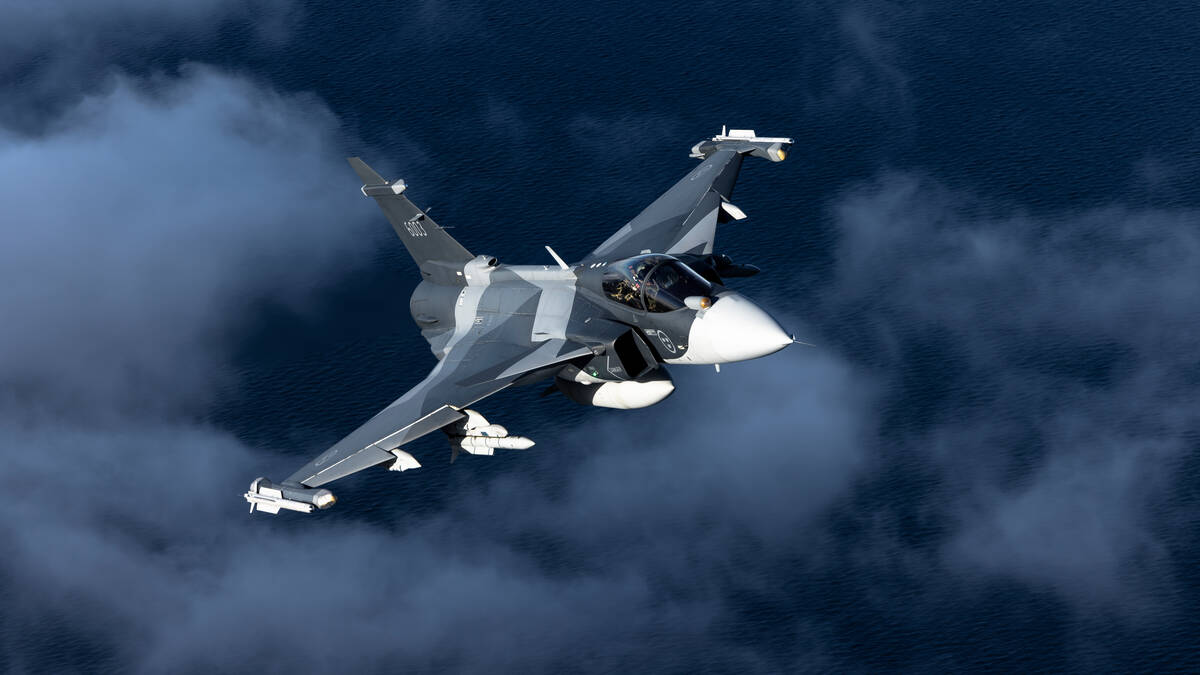
In a landmark moment for European security and the future of tactical aviation, Swedish Prime Minister Ulf Kristersson and Ukrainian President Volodymyr Zelenskyy have finalized a joint declaration outlining a comprehensive, multi-tiered framework for Ukraine’s acquisition of the Saab JAS 39 Gripen multirole fighter. The announcement, delivered at a joint press conference in Uppsala, marks a pivotal evolution in Ukraine’s long-term air defence strategy. Moving beyond stopgap measures, the dual-track agreement provides a near-term capability injection through donated airframes while establishing a definitive roadmap for a next-generation frontline fighter fleet.
The framework utilizes a highly strategic, phased approach designed to address immediate operational requirements while simultaneously embedding Ukraine into the global Gripen ecosystem. The initial phase centers on a direct donation from the Swedish government, which intends to transfer up to 16 Gripen C/D aircraft to Ukraine. This single-division force package will provide an immediate boost to Ukraine’s contested airspace. Crucially, the Swedish Government has already announced the allocation of domestic funds to procure new-production aircraft to replace the donated capability, ensuring the Swedish Air Force maintains its own domestic readiness thresholds. Concurrently, Ukraine has formalized its intent to acquire an initial batch of up to 20 next-generation Gripen E/F variants. This acquisition is structured to take place in sequential batches, marking a definitive shift toward post-war modernization and transitioning the Ukrainian Air Force toward an exceptionally sophisticated, Western-standard platform.
From a doctrinal perspective, the choice of the Gripen is an exceptionally logical fit for Ukraine’s operational reality. While standard modern fighters require extensive, highly manicured concrete runways and specialized logistical footprints, the Gripen was engineered from its inception to survive and operate within contested, austere environments. Saab CEO and President Micael Johansson emphasized that the aircraft is designed to meet advanced threats in demanding environments, noting its ability to take off and land at short distances and operate from temporary runways or roads to enable dispersed operations and high availability. This capability for dispersed operations aligns perfectly with Ukraine’s need to constantly shift its assets to avoid long-range missile strikes. Furthermore, the aircraft features a notoriously low maintenance footprint, designed to be quickly refueled, rearmed and turned around by small teams of mechanics with minimal ground support equipment.
While the political intent is now solidified, the industrial mechanisms are just beginning to spin up. Saab has clarified that it has not yet signed a formal contract or received a definitive order relating to this announcement, but the defense giant is fully prepared to support the upcoming intergovernmental negotiations. The announcement stands as the direct result of a foundational Letter of Intent regarding air defense cooperation signed during President Zelenskyy’s visit to Linköping in October 2025. As negotiations between Swedish and Ukrainian authorities head toward finalization, the aviation world will be watching closely. This pact does not simply reshape the balance of power in Eastern Europe; it cements the Gripen’s legacy as one of the most versatile, combat-ready tactical platforms of the modern era.
Share:
Facebook
Twitter
Pinterest
LinkedIn
NEWSLETTER
Subscribe to our newsletter for new blog posts, tips and news