Lorem ipsum dolor sit amet, consectetur adipiscing elit. Ut elit tellus, luctus nec ullamcorper mattis, pulvinar dapibus leo.
Click Here
Iran’s Homegrown ‘Simorgh’ Transport Aircraft Begins Test Flights
Iran’s Homegrown ‘Simorgh’ Transport Aircraft Begins Test Flights
Iran’s Homegrown ‘Simorgh’ Transport Aircraft Begins Test Flights
Jarryd Sinovich
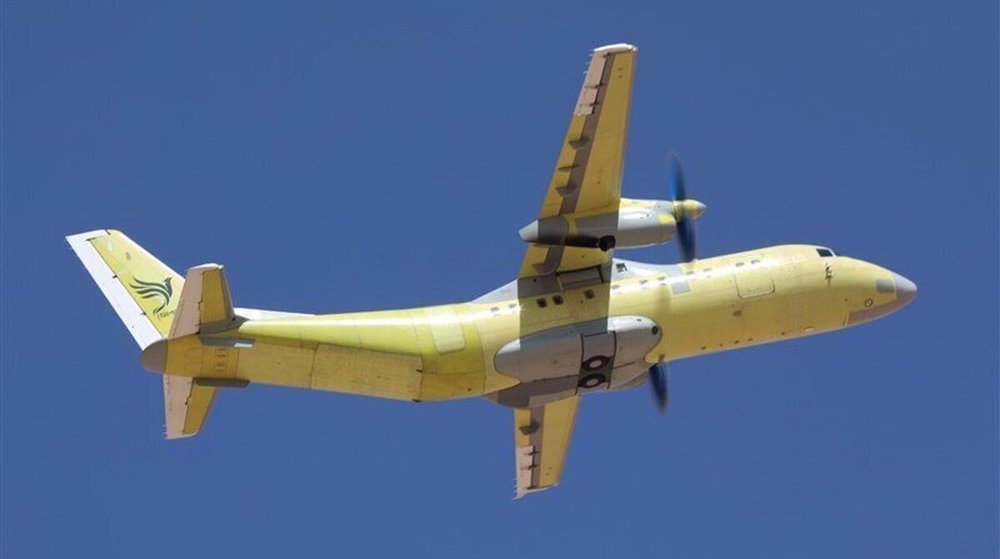
Iran’s domestically developed aircraft Simorgh has officially begun its test flight campaign marking a significant milestone in the country’s pursuit of self-reliance in aviation manufacturing.
The inaugural test flights commenced on Tuesday at an airfield in Shahin Shahr central Iran during a ceremony attended by senior officials from the Ministry of Defense and the Ministry of Transportation.
According to the Civil Aviation Organization (CAA) of Iran, Simorgh must complete 100 hours of flight testing under various operational conditions before it can receive certification to join the national cargo fleet.
CAA chief Hossein Pourfarzaneh stated that Simorgh’s development spanning more than 15 years positions Iran among fewer than 20 countries worldwide capable of designing and manufacturing their own aircraft.
Named after a mythical bird from Persian folklore Simorgh is powered by two 2,500-horsepower engines and can carry up to 6 metric tons of cargo over a range of 3,900 kilometers with a maximum takeoff weight of 21.5 metric tons, making it well-suited for regional transport and logistics operations.
The program has progressed steadily over the past few years. Following a fast-taxi test in May 2022 Simorgh achieved its maiden flight in 2023. Since then the Defense Ministry which oversees production has been working closely with the CAA to obtain both the test certificate and the crucial type certificate confirming the aircraft’s airworthiness.
While some analysts suggest that Simorgh is an evolution of the IrAn-140 itself derived from the Antonov An-140 former CAA officials contend that it represents a new design citing major changes to the fuselage and powerplant configuration.
Engineers describe Simorgh as agile, lightweight and fast with a high payload-to-weight ratio and design features optimized for Iran’s varied climate conditions. Its versatility makes it suitable for a wide range of missions including medical evacuation and cargo transport in both civilian and defense contexts.
Officials believe the aircraft will significantly enhance the logistical capabilities of Iran’s ground and naval forces enabling the rapid deployment of personnel and equipment across the country. There is also growing interest in adapting Simorgh for short-haul passenger operations in the future.
Despite facing international sanctions that have long restricted Iran’s access to new aircraft and spare parts the country has continued to advance its aerospace engineering and maintenance sectors. The Simorgh’s test flight phase thus represents not only a technical achievement but also a symbol of Iran’s determination to sustain an independent aviation industry.
Share:
Facebook
Twitter
Pinterest
LinkedIn
NEWSLETTER
Subscribe to our newsletter for new blog posts, tips and news