Lorem ipsum dolor sit amet, consectetur adipiscing elit. Ut elit tellus, luctus nec ullamcorper mattis, pulvinar dapibus leo.
Click Here
Gulfstream and Rolls-Royce take sustainable aviation to new heights
Gulfstream and Rolls-Royce take sustainable aviation to new heights
Gulfstream and Rolls-Royce take sustainable aviation to new heights
Jarryd Sinovich
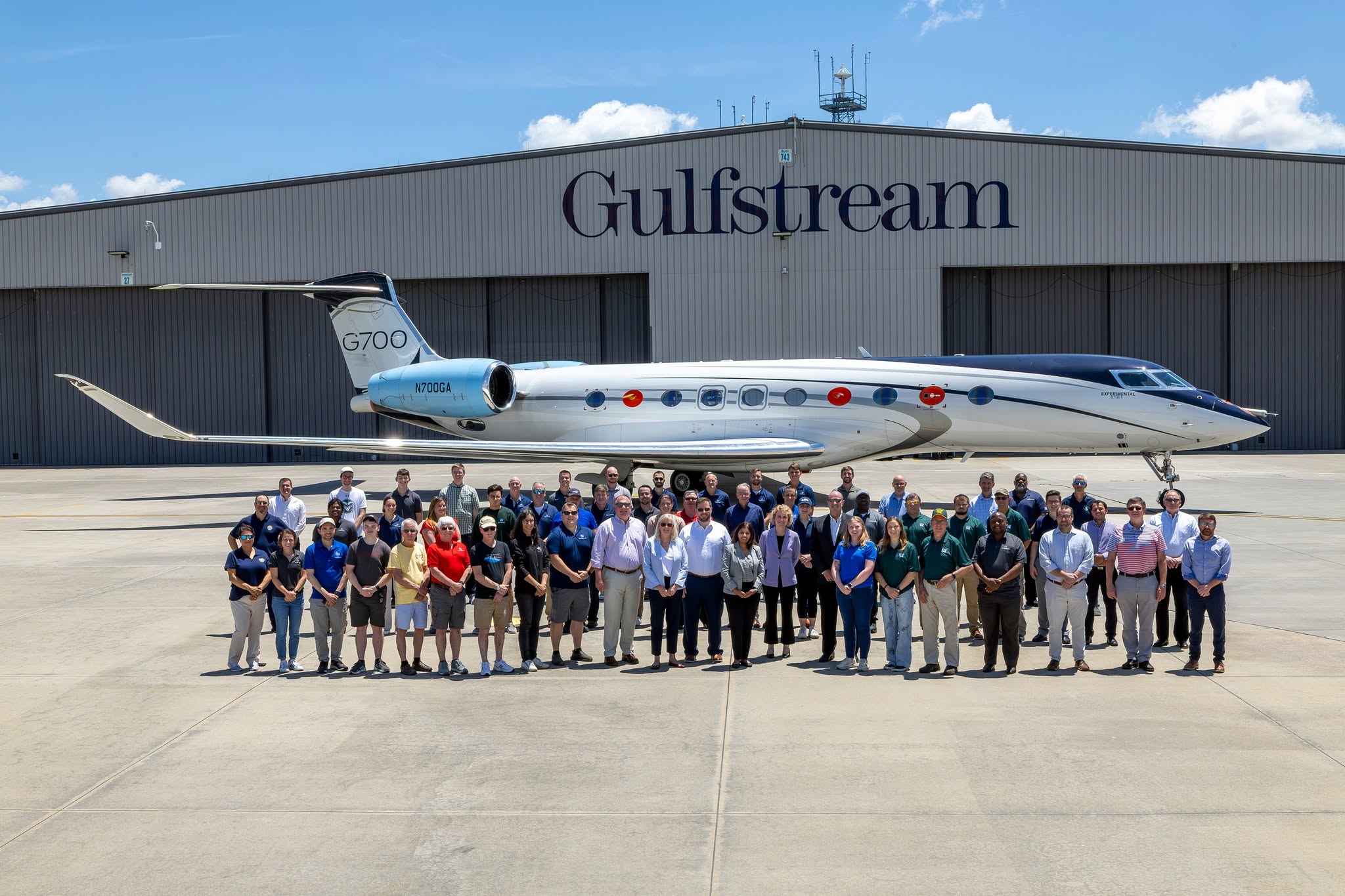
Rolls-Royce and Gulfstream Aerospace Corporation have taken a major step forward in aviation science by successfully completing a high-altitude flight test campaign using 100% Sustainable Aviation Fuel (SAF). Powered by Rolls-Royce Pearl 700 engines, a Gulfstream G800 executed the groundbreaking flight to demonstrate the potential of unblended, neat SAF to reduce contrail-forming particle emissions at altitudes up to 50,000 feet.
The flight test paired the G800 with a specially modified Gulfstream G700, which acted as a flying emissions measurement laboratory. Operating in close formation at altitudes typical for business aviation but higher than most commercial airliners, the aircraft allowed researchers to capture precise, real-world data on particulate matter and contrail-forming atmospheric characteristics.
Led by Gulfstream in close collaboration with Rolls-Royce, the Federal Aviation Administration (FAA), NASA, the German Aerospace Centre (DLR), Missouri University of Science & Technology, Aerodyne Research, Montana Renewables and World Fuel Services, the campaign isolated how different fuel compositions influence non-CO2 emissions. The research team compared conventional Jet-A, low-sulphur Jet-A and neat HEFA SAF, which contains zero sulphur or aromatics. Preliminary results revealed a significant, measurable reduction in the particulate emissions that cause contrail formation when running on neat SAF.
Alan Newby, Director of Research and Technology at Rolls-Royce, noted that sustainable fuels combined with ultra-efficient engines will play a vital role in decarbonizing aviation and reducing non-CO2 climate impacts. The campaign proved once again that all in-production Rolls-Royce Trent and business aviation engines are fully compatible with 100% SAF, laying critical groundwork for future certification. Currently, SAF is only certified for commercial blends of up to 50% with conventional jet fuel, though it carries the potential to reduce net CO2 lifecycle emissions by roughly 80%.
Share:
Facebook
Twitter
Pinterest
LinkedIn
NEWSLETTER
Subscribe to our newsletter for new blog posts, tips and news