In the early 1930s the British Empire needed quicker access to its member countries for the delivery of mail and passengers. Ships did the job well, but the journeys took many weeks, especially to territories like South Africa, India, Singapore and Australia.
Aircraft were the logical solution, but the infrastructure of airports and runways were very few. However, vast bodies of water existed throughout the territories, so the solution was to use seaplanes and flying boats.
A Short Singapore, flown by Alan Cobham carried out a survey of the possible flying routes around Africa in 1928. In 1931 he undertook another survey, formally on behalf of Imperial Airways, using an S-11 Valetta, a three-engine monoplane. These flights were instrumental in Empire Airways introducing flying boats on the Africa service.
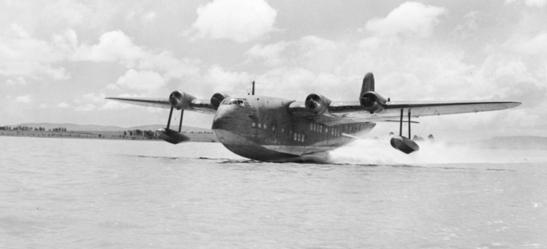
South Africa was building the Vaal Dam and, being close to Johannesburg, was the obvious choice for flying boats. When the Vaal Dam was completed in 1938, Imperial Airways, the predecessor of BOAC, established a flying boat base at Deneysville, with Hartbeespoort Dam as an alternative port.
The first S23 Empire class boat made its initial flight on July 4th, 1936. The S23s were also known as “C-Class” flying boats, because each was given a name beginning with the letter “C”.

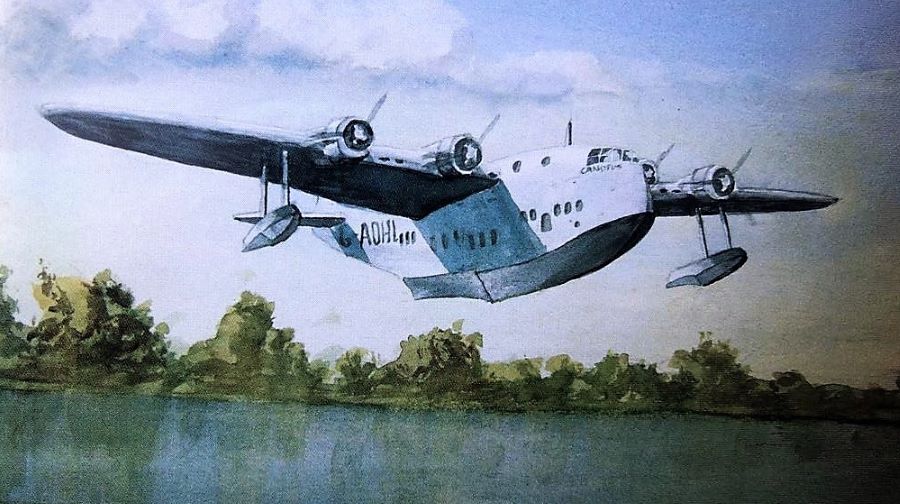
On 2nd June 1936 with flying boat G-ADHL ‘Canopus’, the Empire Airmail Scheme was officially inaugurated when 3 500lbs (1.75 tons) of mail left Southampton to South Africa, landing on the Vaal Dam. The first northbound service from Durban to the UK happened on the 6th June with G-ADVC ‘Corsair’.
British Imperial staged its flights through a hub at Alexandria in Egypt, with the S23s known as ‘Clio’ and ‘Calypso’, flying to and from Southampton. ‘Calypso’ continued East to India and beyond while the ‘Centurian’, Canopus and ‘Corsair’ all served South Africa.
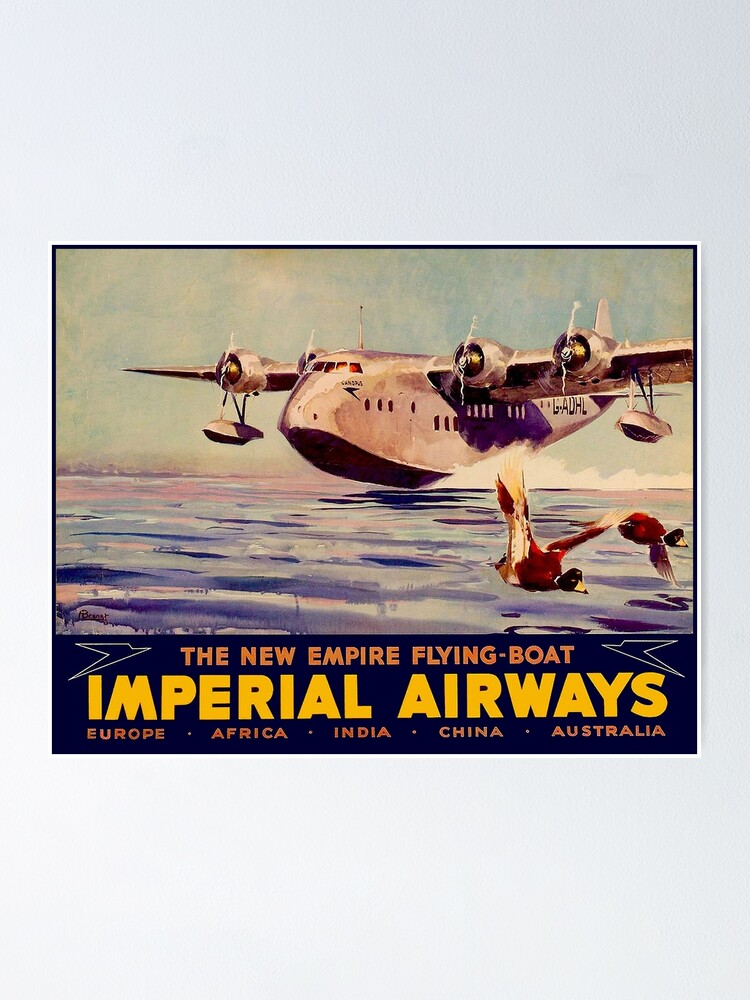
In November 1937, Imperial Airways took the bold step of ordering 31 large four-engine flying boats from Short Brothers. Imperial Airways called them “Imperial Flying Boats”, but the popular name was “Empire Flying Boats”.
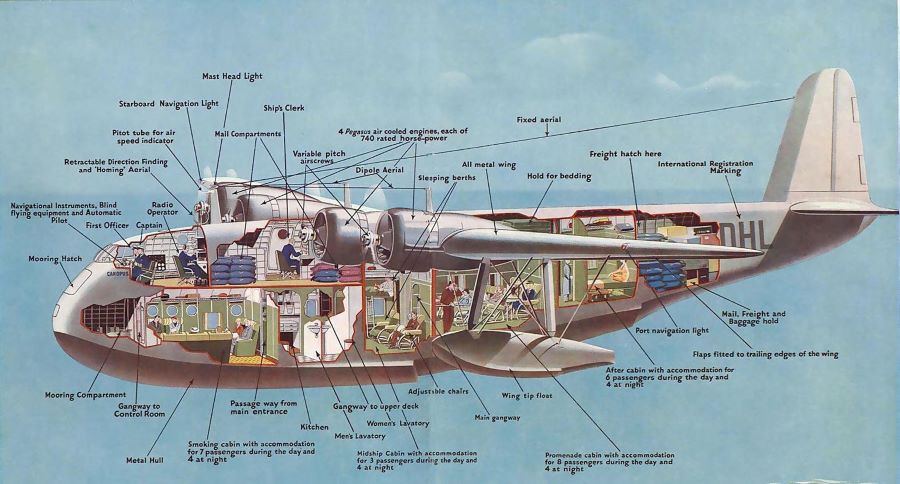
These bigger aircraft carried a large volume of mail, whilst passengers were accommodated in luxurious cabins relaxing and gazing down at the passing scenery. By the mid-1930s, all the mainline routes were operated by these Class C flying boats.
The Empire Air Mail programme now included two flights to South Africa per week.
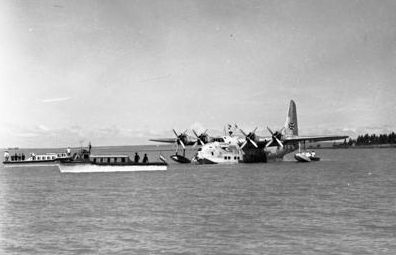
During flights, which were at a low enough altitude for passengers to get a good view of the Nile and the wild African landscape, the purser would lay out a cold buffet on a bench. Dinner would be “ashore” in a good hotel while the great silver craft spent the night riding at anchor under the African moon. Johannesburg-bound passengers would disembark at Deneysville, near the Vaal Dam wall, an hour’s bus journey from town.
Imperial Airways’ Short S20 floatplane G-ADHJ ‘Mercury’ set a world long-distance record for seaplanes by flying non-stop from Dundee to the Orange River, South Africa covering 6,045 miles in 42hours 5minutes between 6-8 October 1938. The ‘Mercury’ was assisted from the Tay at Dundee by ‘Maia’.

Flights continued during World War II and many of the Empire boats remained in service until 1947. British Overseas Airways (BOAC) continued with the flying boat service to South Africa.
On March 10, 1948, Solent G-AHIV ‘Salcombe’ arrived at the Vaal Dam on the proving flight from Southampton and was followed by a special flight for the press on May 1, flown by G-AHIN ‘Southampton’ piloted by Capt. E ‘Teddy’ Rotheram.
The first commercial service was introduced on May 4, 1948 on the Springbok run to Vaal Dam, flown by G-AHIT ‘Severn’. The trip took 4½ days.
The Second World War was destructive and many countries suffered, but there is always a silver lining.
Under the Joint Air Training Scheme, South Africa trained 33 347 aircrew for the South African Air Force and the Allies, and as a result built many airfields and airports throughout South Africa.
Aircraft had also advanced in terms of speed, engines and load carrying capacity and many surplus military aircraft were now being converted for civilian use.
On 17th November 1950, BOAC replaced its Southampton to Johannesburg Solent flying boat services with a thrice-weekly Handley Page Hermes G-ALDR ‘Herodotus’, making the first service to Palmietfontein near Johannesburg, later named Jan Smuts International Airport and today known as O.R. Tambo International Airport.
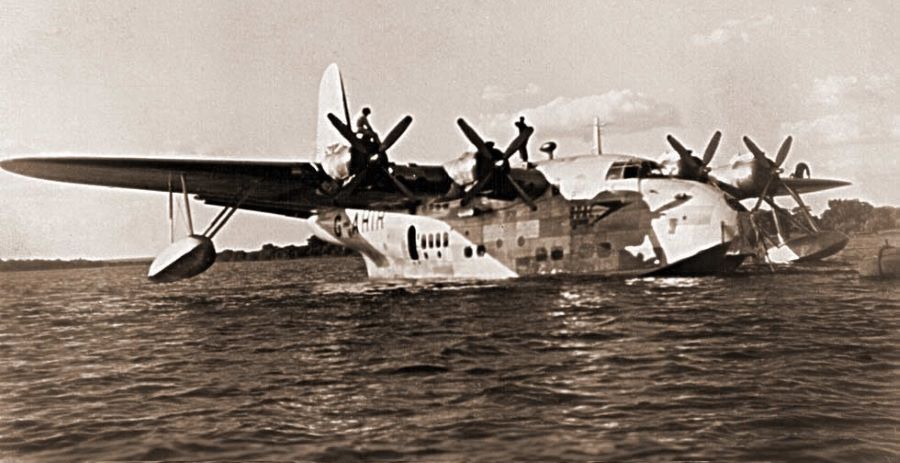
The following year NOTAM 53 of 1951 announced the cancellation of the aerodrome license for Vaal Dam. Imperial Airways and BOAC had maintained continuous flying boat operations since 1924.
The flying boats of the nineteen thirties and forties represented the heyday of romantic travel, but now they were obsolete, with jet travel making the world a much smaller place. It was the end of the Flying boat era.