Aircraft seating has changed a lot through the years, but its evolution is not just due to trends. Here we follow progress from the Boeing historical archives.
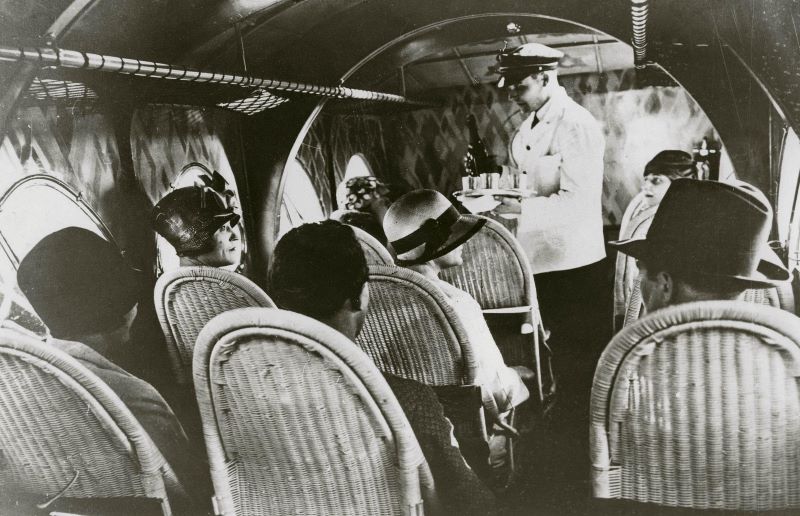
The aircraft seat had a humble start as little more than a collection of wicker chairs fastened to the floor. By the late ‘20s, these wicker chairs were lined with leather and padding to make them a little bit more comfortable. It was soon noticed that leather was popular as it was easy to wipe down, as often airports were very dusty and sooty.
In the 1930s came aluminium-tube seating, thick seatbelts, thicker padding, and velour covers.
From 1939 to the late ‘40s, the airlines had ambitions to make flying a luxury experience. Seats could be converted to beds for overnight flights, and seatbelts were upgraded closer to the types of buckled fabric belts we see today. Decorative details made the aircraft interior feel like a living room. These aircraft were all prop liners.
Boeing’s 377 Stratocruiser from 1949 had a spiral staircase which gave passengers access to a lower deck lounge where they could stretch their legs and socialise. Drop-down beds overhead made for sleeping arrangements.
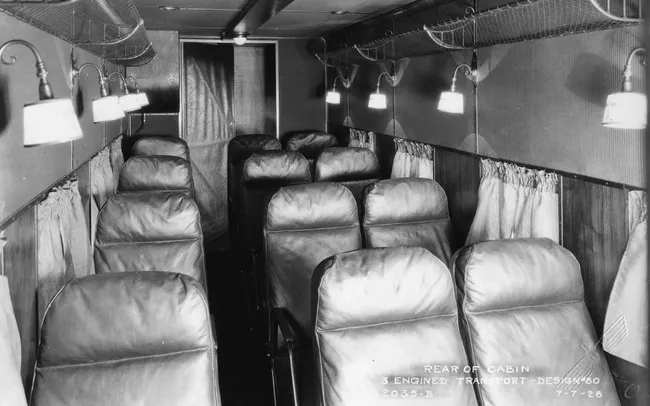
Some seats were mounted on shock absorbers to minimise some of the vibration from the propellers. Seats were basically designed for those elite who could afford to fly.
Post WWII, with the introduction of the Boeing 707, meals were served by putting a pillow on your lap and the tray placed on the pillow. No tray tables then. The 1959 Pan Am 707 was one of the last of the aircraft that Boeing delivered with one class of service before the introduction of tourist class. Seats were 5 abreast at a comfortable 19-inches wide.

With the introduction of tourist class in the late ‘50s came six-abreast seating as featured on 707, the 727, and 737.
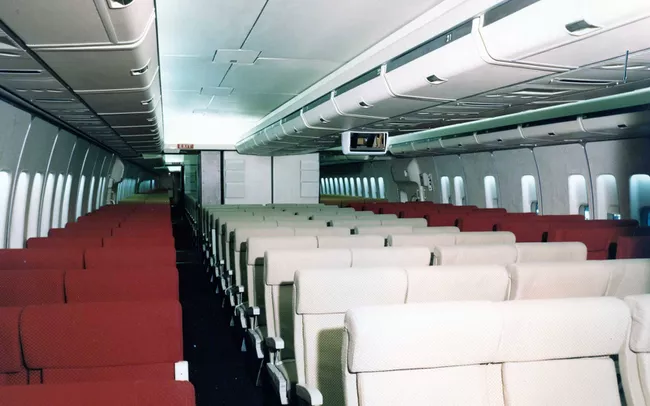
When the 747 entered service in 1970, it featured nine-abreast seats; a triple, a quad, and a double row. Some airlines were going 10 abreast and legroom was tight. While many of the first aircraft were introduced with 34 or 33-inch pitch, they very quickly went into 32-inch pitch.
The 747 was also the first to have enclosed pivoting overhead stowage bins, which has carried on to today’s most modern models.
“It was really with the 747 that the multiplex system was introduced, with attendant call and reading light activation. It was also the system that provided the audio for the movies that you listened to, with pneumatic tubes that plugged into the armrest,” said PJ Wilcynski, a historical researcher at Boeing.
The 747 also featured an upper lounge for first class passengers. The 747 was a game changer and trendsetter.

In the ‘80s, there were dramatic improvements that passengers couldn’t see, and which still drive the design of airline seats we fly in today. New safety regulations required seats to withstand up to 16 g of force on impact (16 times the force of gravity). There were also new fire regulations, which led to the introduction of a fire-blocking layer on seat cushions and fire-retardant cabin textiles.
Today’s luxury business and first class seating options are very recent. Up to the late ‘90s, and even in the early ‘00s, most premium classes offered recliner-style seating. New composites allowed for shells around convertible seats to create beds and private suites.
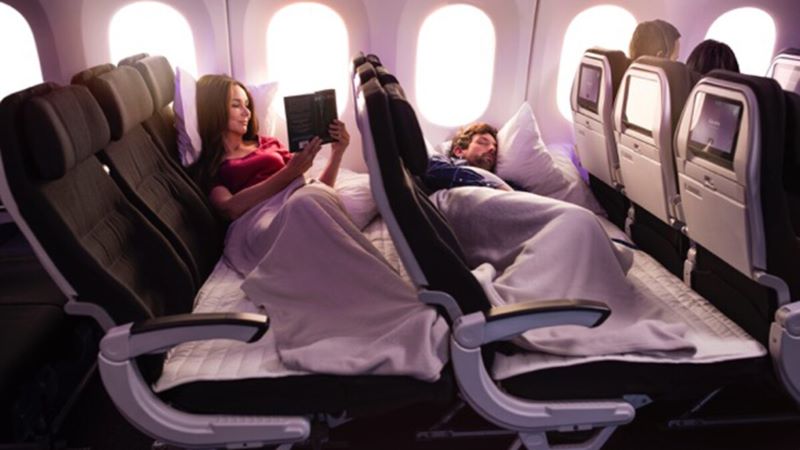
In economy class, the last decade has seen new in-flight entertainment (IFE) systems that are mounted to seat backs, power outlets, tray tables which can fit our electronic devices, and much more.
Designers are still working on improvements and Boeing has started production on the next generation of flight — the 777X which promises a new era of flying. While the seating details are still tightly under wraps, we’re sure they won’t be made of wicker.
THE FUTURE
The future of seats is under strong debate. Already we see “slimline” seating which has less padding in the back. Seat pitch and width in economy class have also been decreasing.
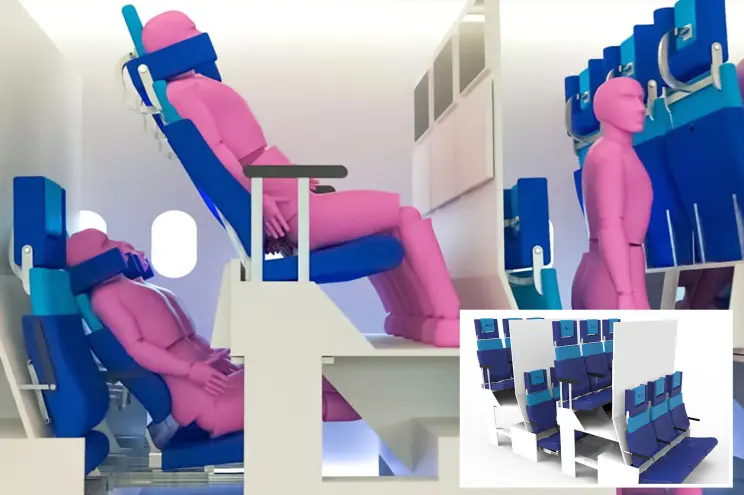
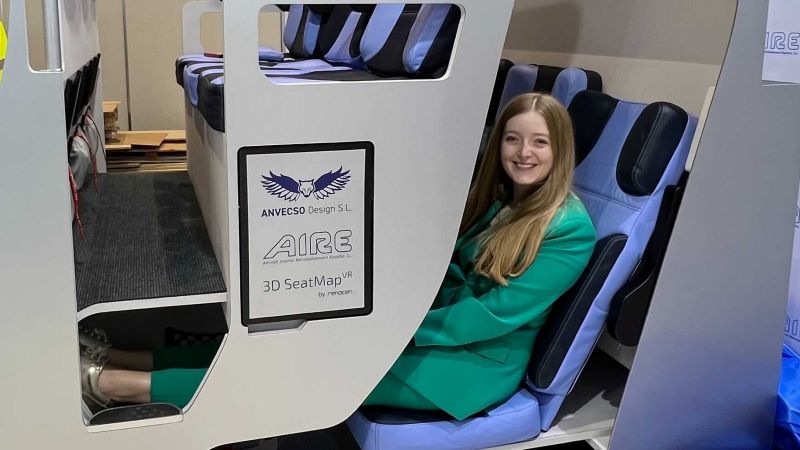
Double –decker seating is also a proposal, but these types of seating are only proposed for short –haul routes, and so far public opinion is not favourable. Claustrophobia is a big problem for these designs.
More favourable designs that cater for up-market passengers give us hope. Some business class seats, such as the Recaro CL 4420, have a built-in massaging feature.
Many business class cabins feature seats that recline to a sloped flat position. These “lie flat at an angle” seats allow for greater comfort than traditional recliner seats, but are less comfortable than fully horizontal flatbed seating.
Most international first-class and a growing number of international business-class cabins feature seats which recline to a full-horizontal flat position, forming a bed.
(Source – Travel & Leisure, Boeing archives & J smith)