The very light jet (VLJ) category appeared so fast in 2007 that many aircraft manufacturers were caught off-guard, adapting existing product lines to fill the niche. Piper Aircraft was no exception.
This new category of small business jets required seating for four to eight people and was approved for single-pilot operations.
For many manufacturers, the VLJ category would require the use of a single jet engine to make the aircraft affordable. However, manufacturers opted for the traditional two engines. Piper chose to go the single-engine route and called their aircraft the PA-47 PiperJet.
However, when designing a single-engine jet, there are not many places you can place the engine, considering that it must be mounted in the centreline of the aircraft.
Piper decided not to mount the engine within the fuselage, but externally. This would do away with ducting airflow through inlets and would be safer as it would minimise the risk of injury to the occupants in the event of catastrophic engine failure. Additionally, the single-engine should be provided with clean undisturbed airflow and must allow the hot exhaust a clear exit without damaging the tail surfaces.

If the inlet and/or exhaust were below the fuselage, then debris could be an issue. This would come from the landing gear and the exhaust. To prevent exhaust damage to the tail, competitors had their own solutions like the V-tail as seen today in the Cirrus Vision SF50 Jet, while Adam Aircraft opted for a twin boom design with a high mounted horizontal tail.
The natural place was to mount the engine above the fuselage and within the vertical tail. This configuration is used successfully by the Lockheed Tri-star and the DC-10, but presented Piper with a unique set of engineering challenges.
With this design, Piper could use existing components from their product line. The Piper Meridian was the ideal candidate with the fuselage and wing requiring little changes compared to a clean-sheet design. This would also be beneficial during certification and production.
The aircraft first flew in July 2008, and immediately the high thrust line became a problem area. The application of power resulted in a pitch-down moment and a power reduction produced a pitch-up moment. Piper developed a simple fixed nozzle system that produced a variable thrust angle during power changes through the Coandă effect, in which air clings to a surface via air pressure.
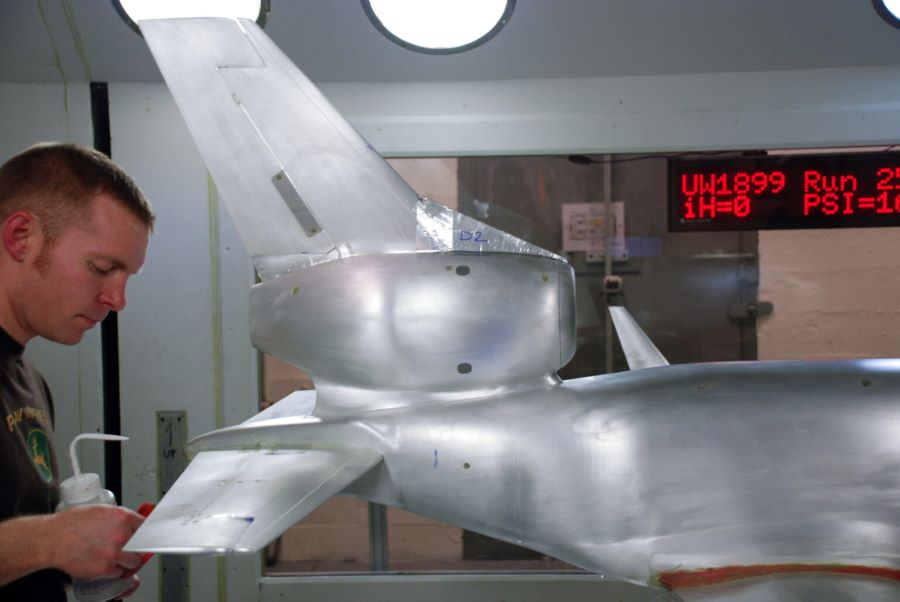
At low speeds, the effect created a greater thrust vector that effectively countered the high thrust line, while at high speeds, the effect was minimal. A 2.2 percent geometric loss of thrust was considered acceptable. With this design change, test pilots reported go-arounds as a non-event.
Another issue was the pitch down effect when full flaps was selected. This was resolved by increasing the span of the horizontal tail and adding a 30 percent sweep, thus moving the aerodynamic centre further aft. This sweep design had a further benefit in preventing tailplane stalls.
With over 180 pre-orders on the book, Piper planned to build a larger version of the PiperJet to be called the Altaire. This aircraft would have a larger cabin, 35,000ft service ceiling, a 360 knot maximum cruise speed and a 1,200 to 1,300 nautical mile range.

However, following the late 2000s recession, economic and market forecasts placed a huge risk for Piper in the taxi market, so Piper placed the program on indefinite hold.
Only one example of the PiperJet was built, and this aircraft now resides in The Florida Air Museum in Lakeland, Florida.
Today, the VLJ category is dominated by the Cessna Mustang and the Embraer Phenom 100/300, with the latest newcomer, the Pilatus PC 24.