During my time flying airliners, I recall at least two episodes when I experienced spatial disorientation. On the very few occasions that I felt like sharing this experience with a colleague, usually over a cold one, it always raised an eyebrow and resulted in an uncomfortable silence.
I guess pilots need to keep up the pretence that we’re immune to such follies. Which, of course, is exactly why I thought of writing this!
My first experience
During the first event, many years ago, we were following a standard instrument departure out of Johannesburg in the once-mighty MD80. For reasons that now completely escape me, I had to reach behind me for a document in our ‘library’.
The combination of us simultaneously climbing and turning, and me burying my head in the corner behind my seat, had an immediate and profound effect. It felt like the aircraft had made a perfect barrel roll. Fortunately the sensation resolved almost immediately when I turned my head back to where it was supposed to have been all along while flying a departure!
This was the famous Coriolis illusion. The fluid in my inner ear’s semi-circular canals accelerated in an unexpected direction, creating cross-coupled stimulation, while my eyes no longer provided any orientation. The sensation was overwhelming.
I should add that it was a beautiful, clear day, which just proves the old saying that you don’t have to be flying in bad weather or at night to experience spatial disorientation, but it helps! And help it did with my next event.
Flying when you’re fatigued, stressed or ill increases the likelihood of experiencing spatial disorientation, as is not being ‘flying fit’
The second experience
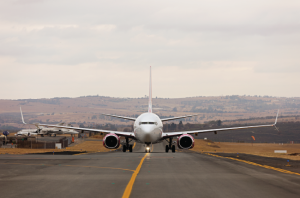
Fast forward about a decade and we were flying in some pretty foul weather into Durban in a Boeing 737-800. It’s a very capable aircraft, which made it possible to go to Durban in the first place in these conditions. The Mad Dog would have had to divert! We barely made it in, mere feet from hitting the TOGA buttons. The weather worsened further after we vacated the runway and we had some fun trying to find our way to the gate.
A bit later, having swapped our sweaty, but relieved passengers for some fresh ones, the visibility improved just enough for us to depart. It would be a low-visibility take-off on the exact minimum permissible numbers.
Given the nature of the weather, we would not do a reduced thrust take-off, instead unleashing the full unbridled might of the CFM56-7s. This, coupled with sea-level performance, results in a not-to-be-scoffed-at acceleration. We were still accelerating very nicely when my colleague called “rotate”.
At this time I transitioned, as per standard operations, from the dim whirring centreline lights in an otherwise grey expanse to my flight display. This is another fantastic bit of kit, but definitely not a homo sapiens’ preferred or natural way of staying the right way up.
As I pitched the aircraft to the initial pitch attitude, my strictly-designed-for-walking-on-earth-only vestibular system was telling me that the aircraft was still pitching up. I felt a powerful urge to push the nose down. Of course I didn’t. If I’d acted on the sensation, you’d have read about this in a newspaper some years ago.
As we climbed away uneventfully, I tried to exude calm. Only the hairs on the back of my neck would have betrayed me I had just been schooled in the somatogravic illusion.
Be vigilant
I’m sure we’ve all read about the various illusions that can occur. Perhaps it isn’t all that important to know exactly what their names are, and I certainly won’t bore you with each one. However, I do recommend vigilance.
These illusions almost always happen when you least expect them. Flying when you’re fatigued, stressed or ill increases the likelihood of experiencing spatial disorientation, as is not being ‘flying fit’. Many of us aren’t current thanks to the pandemic, so be very careful. The biggest risk is being human. Don’t ever think it won’t happen to you.
HAVE YOU READ: Say again!?
Share:
Facebook
Twitter
Pinterest
LinkedIn



NEWSLETTER
Subscribe to our newsletter for new blog posts, tips and news