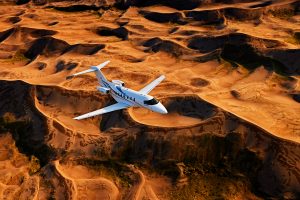
The more sophisticated and heavier the aircraft, the more complex the layout of its fuel system.
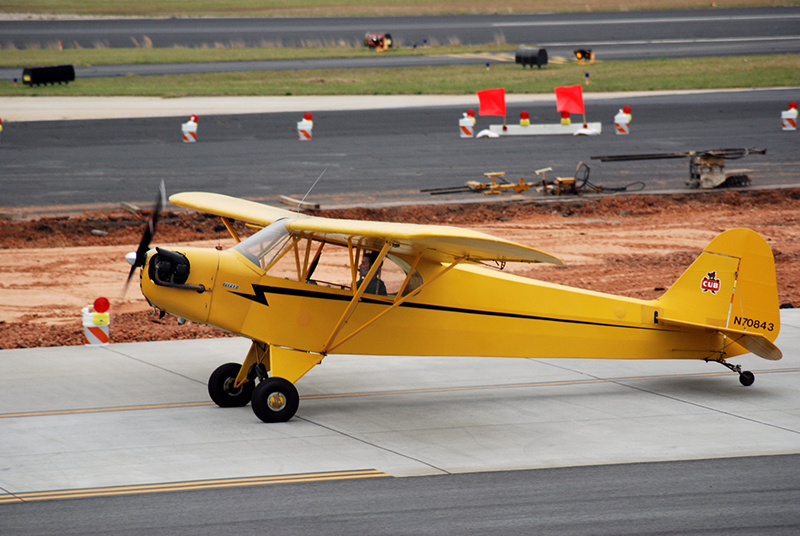
Let’s look at a few aircraft from the Piper stable as examples. The basic Piper J3 Cub has only a single tank in the fuselage, located just behind the engine firewall. When it comes to their training aircraft, you’ll find they have two tanks for the most part. They’re located on the inboard side of each wing, close to the fuselage.
The heavier Cherokees, and their derivatives have four main tanks, two in each wing. One is located inboard and the other outboard, as far away as at the wing tips. Each of these tanks are selected singularly.
The power of six
Some light general aviation aircraft have as many as six tanks. With the advent of more powerful general aviation aircraft that could carry more passengers further, faster and higher, there grew a need to carry more fuel.
Later models of the Comanche and then the Twin Comanche were built with inboard and outboard wing tanks and then − as an optional extra − wing tip tanks.
Cross-feed capability
Multi-engine aircraft have a cross-feed capability. On any twin-engine aircraft, the left engine is fed by fuel from the left, and the right engine with fuel from the right.
If an engine fails or must be shut down, the remaining live engine will need to be operated at a higher power setting. This will obviously increase the rate of fuel consumption.
If the fuel supply on the side of the operating engine is running short, you can select to enable fuel to be “crossfed” from the dead engine’s side to that of the operational one.
Fuel tank layout in twin engine jet transport aircraft
The basic fuel tank layout in twin jet transport aircraft is more complex. There’s one tank in each of the inboard wing root areas, and these are integral with the wing structure and located very close to the fuselage. This is where the wing is thickest and where the volume of fuel that can be carried is greater than it would be further out towards the thinner wing tips. There’s also a centre tank within the lower section of the fuselage that lies between the wing roots. This is close to where the centres of gravity and pressure are likely to be located.
Loading fuel in a twin engine jet transport aircraft
Let’s assume that we’re operating a three to four-hour flight to a far-off destination in a Boeing 737-800. We’ve calculated the fuel so that any conceivable performance or structural limits won’t be exceeded and so that we’ll have enough fuel for diversions to other airports if need be. The weight of the passengers and cargo have also been considered so that the revenue for the flight is not affected.
The fuel requirement is 15 800kg. The wing tanks will be filled to capacity, with each carrying some 4 900 litres of fuel that weighs around 7 800kg. Only another 8 000kg of fuel is required for the flight, and this goes into the centre tank.
The wing bending moment
The engines are started with fuel provided from the wing tanks. The left tank supplies the left engine and the right tank supplies the right engine. This is what is known as a “tank to engine” supply and it’s the safest way to operate the aircraft for the take-off and initial climb.
The aircraft accelerates down the runway and rotates at the Vr speed. In this instant, anyone watching the take-off from outside the plane would seeboth wings bending upwards from the wing rootsas they start providing the lift for flight.
In essence, anything in the fuselage is “dead weight” as no part of it contributes to the aircraft’s lift. There is the weight of the fuselage itself, the payload, the undercarriage and 8000kg of fuel!
Once in flight, the wing bending moment at the wing root is immense.
Zero fuel weight limitations
The bending force at the wing root exists throughout the flight. The heavier the weight in the fuselage, the higher the stress. This is why there’s a limitation, either implied or published, on the weight that may be carried in the fuselage of any aircraft.
Airline pilots refer to this limitation as a “zero fuel weight limitation” and abide by it on every flight.
As an aside, consider the loads that can be imposed on the wing roots of an aerobatic aircraft, particularly those with cantilevered wings. Within the fuselage, there could be two pilots, luggage, safety equipment, a smoke tank full of smoke oil and also a full main tank of fuel. How do you think that wing copes when 8gis being pulled in a manoeuvre?
But I digress. Let’s get back to the twin engine jet transport aircraft. Straight after take-off, when the aircraft is climbing away and is at its heaviest, the dead weight of the fuselage leaves the wings with a lower margin to their ultimate breaking point.
At 10 000 feet above ground level, the centre tank pumps are switched on and these override the wing tanks. Fuel is now provided from the centre tank in the fuselage and it gradually starts diminishing. This process causes the wings to benefit from an increased margin to the breaking point, becoming “effectively” stronger, so to speak. When the centre tank’s fuel has been depleted, “tank to engine” supply is resumed.
The same goes for light aircraft
This all makes sense, doesn’t it? Therefore, this is the way light aircraft should be operated too: use up almost all your inboard fuel, keeping only some of it for arrival manoeuvring and the landing. Then use your outboard fuel next.