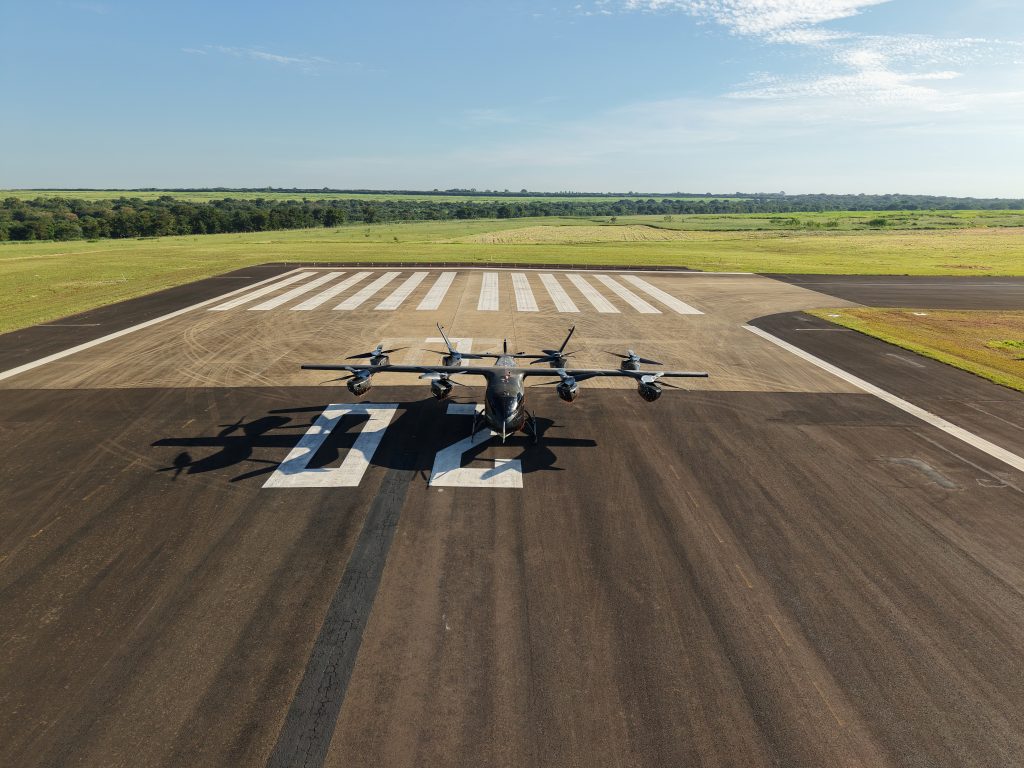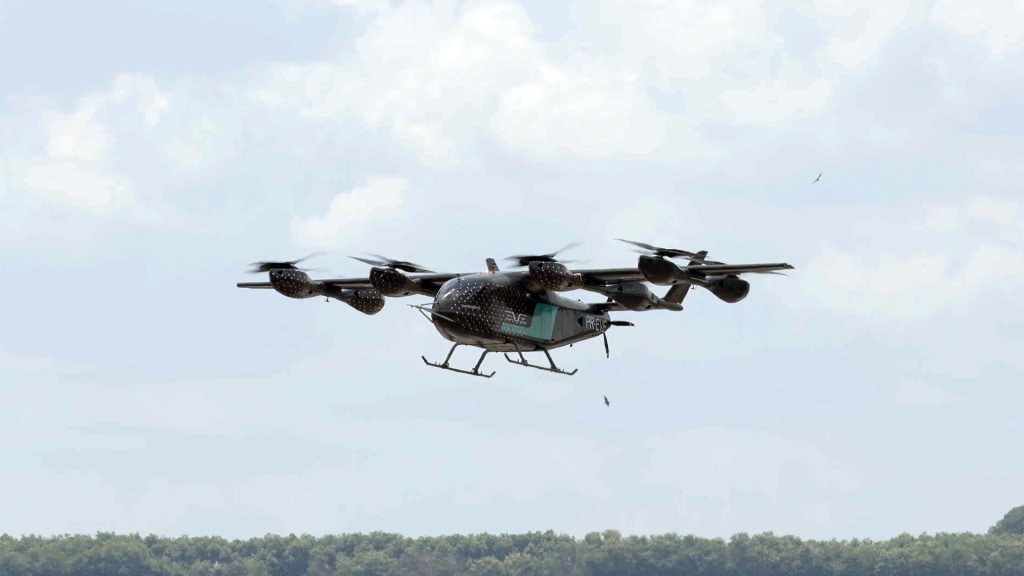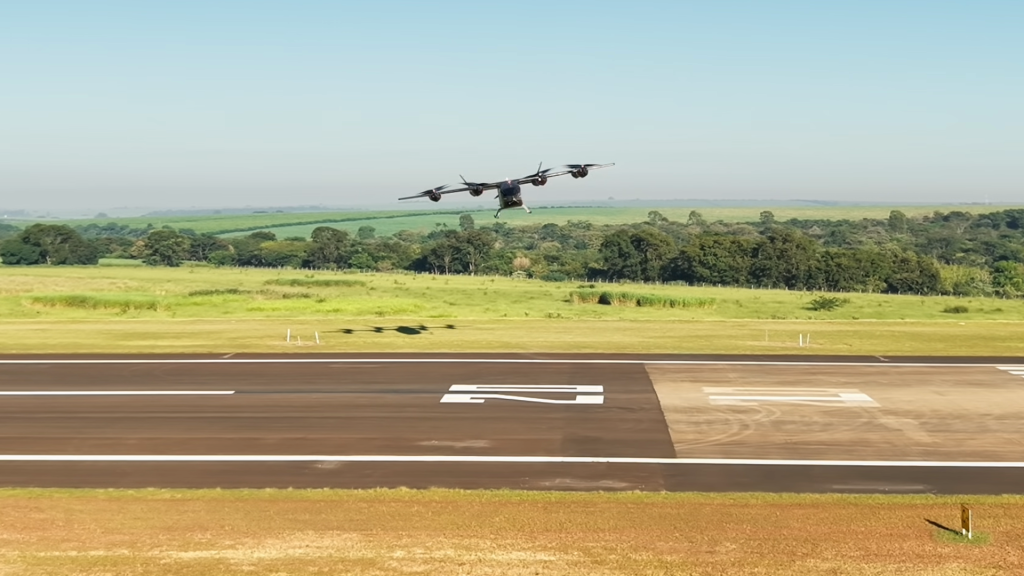

Eve Air Mobility has successfully closed out the hover and low-speed flight testing block for its full-scale engineering prototype. This milestone marks a significant step forward in the company’s flight test campaign, generating high-fidelity data as Eve prepares the aircraft for the crucial transition phase of flight. The completion of this phase reflects a disciplined building-block approach to flight testing. By expanding the flight envelope incrementally, the engineering team has been able to validate control laws, aerodynamic models and aircraft behaviour against real-world data before moving into more complex operational regimes.
Across 59 successful flights, the prototype accumulated a total of 2 hours, 27 minutes and 33 seconds of flight time. These operations confirmed stable hover performance and predictable control behaviour within the initial envelope, providing the engineering team with a deeper understanding of loads, propulsion and energy management. During the initial low-speed input phase, testing focused on aircraft behaviour below 15 knots to validate downwash effects, thermal characteristics and the propulsion model. As the campaign progressed, the operational envelope expanded to approximately 20 knots of ground speed. This allowed the team to execute simultaneous four-axis manoeuvres, supporting progression toward larger control deflections and higher speeds.
Key technical milestones achieved during this block include the execution of more than 100 specific flight test points, the first demonstrations of autoland capabilities and the successful testing of the simplified fly-by-wire mode, which serves as a secondary control layer. The aircraft also reached a maximum altitude of 215 feet above ground level and achieved a longest single flight duration of 3 minutes and 48 seconds. Engineers noted that the aircraft displayed consistent behavior under simultaneous multi-axis inputs. Additionally, recorded noise levels remained within expected parameters, while propulsion and battery performance exceeded initial projections.
The data gathered during these 59 flights will be used to refine Eve’s aerodynamic and load models, ensuring a tight correlation between simulation predictions and actual flight behaviour. This high-confidence data set is foundational for the upcoming phases of the certification path. Over the coming weeks, the engineering prototype will undergo a series of planned ground tests. These evaluations are designed to prepare the aircraft for the transition flights block, which is expected to begin in the summer of 2026. The transition phase will focus on validating lifter-pusher synchronization, expanding the envelope further as the program advances toward full wingborne cruise flight.