Lorem ipsum dolor sit amet, consectetur adipiscing elit. Ut elit tellus, luctus nec ullamcorper mattis, pulvinar dapibus leo.
Click Here
Eurodrone: Europe’s Sovereign Skies
Eurodrone: Europe’s Sovereign Skies
Eurodrone: Europe’s Sovereign Skies
Smoke On Go
Eurodrone: Europe’s Sovereign Skies
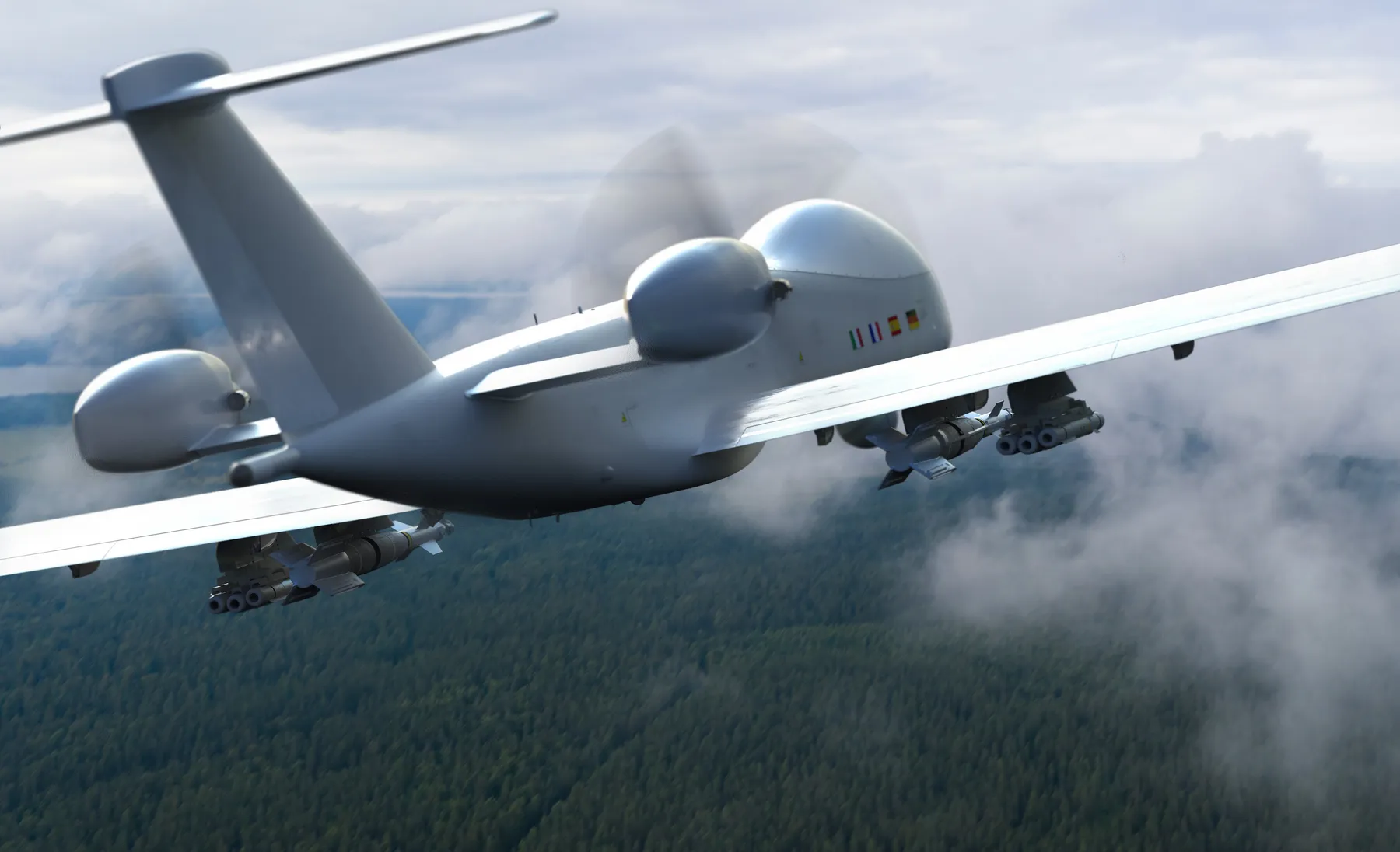
The Eurodrone marks a major step in Europe’s defence capability, delivering the continent’s first home-grown Medium Altitude Long Endurance (MALE) Remotely Piloted Aircraft System (RPAS). Designed to provide intelligence, surveillance and reconnaissance (ISR) along with precision strike capability, it fills a long-standing gap in European strategic autonomy.
For decades Europe relied on foreign systems for high-performance MALE platforms. Now, with the Eurodrone at the heart of the EU’s ReArm / Readiness 2030 plan, that dependency is ending. Four nations—Germany, France, Spain and Italy—have ordered 20 systems, each including three air vehicles and two ground control stations. Airbus, Dassault Aviation and Leonardo are leading development, with India and Japan observing the programme.
Collaboration and Progress
Gilles Armstrong, Head of Eurodrone at Airbus, describes it as more than an aircraft:
“The Eurodrone is a symbol of Europe’s commitment to its own security and strategic autonomy.”
He notes that strengthening industrial partnerships and collaboration with OCCAR and customer nations will be vital to meeting deadlines.
The programme is moving toward its Critical Design Review (CDR) in late 2025, a key milestone before manufacturing begins. Entry into service is planned before the end of the decade.
Combat Edge
Eurodrone offers greater endurance, range and payload than smaller drones. It carries advanced ISR sensors and weapons, enabling persistent surveillance and precision targeting. As a fully ITAR-free system built on a European supply chain, it provides independence in export and operation—crucial in today’s volatile geopolitical climate.
Maritime Role
The aircraft is also designed for maritime surveillance with Automatic and Warship AIS, maritime radar and NATO-standard connectivity such as Link 22. Its open architecture allows for future growth and enhanced capabilities.
Share:
Facebook
Twitter
Pinterest
LinkedIn
NEWSLETTER
Subscribe to our newsletter for new blog posts, tips and news