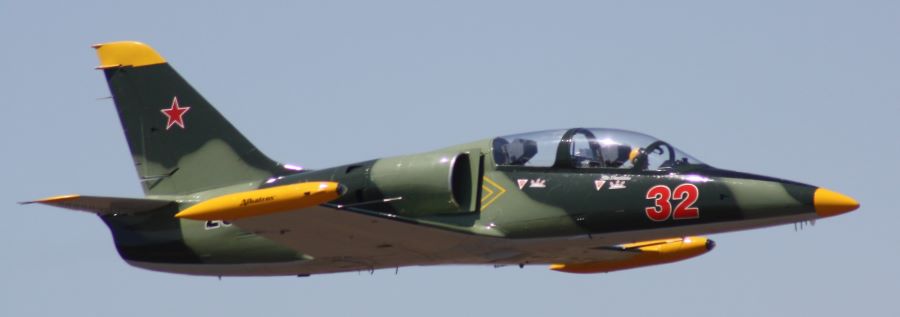
The Aero L-39 is the most widely recognised used jet trainer in the world today; performing basic, advanced pilot training and combat missions in a light-attack role.
Designed in the 1960s the L-39 Albatros was the successor to the Aero L-29 Delfin. Its maiden flight happened on 4 November 1968 and was the first trainer aircraft in the world to be equipped with a turbofan engine.
Production commenced in 1971, with military service from 1972. The L-39 became recognised as the preferred primary trainer for the Warsaw Pact countries. Thousands of L-39s would be produced for various military customers in Eastern Europe, later being exported across the world both as a trainer and a light attack aircraft with over 30 different air forces.
Several models of the L-39 Albatros were developed, culminating in the L-59 Super Albatross in the 1980s. The later L-139 used a western Garrett TFE 731 engine. Production of the L-39 ended in mid -1990s after more than 2,800 aircraft had been produced.
Since the 1990s, it has also become popular among civilian operators, with a number in private hands here in South Africa performing at many airshows across the country.
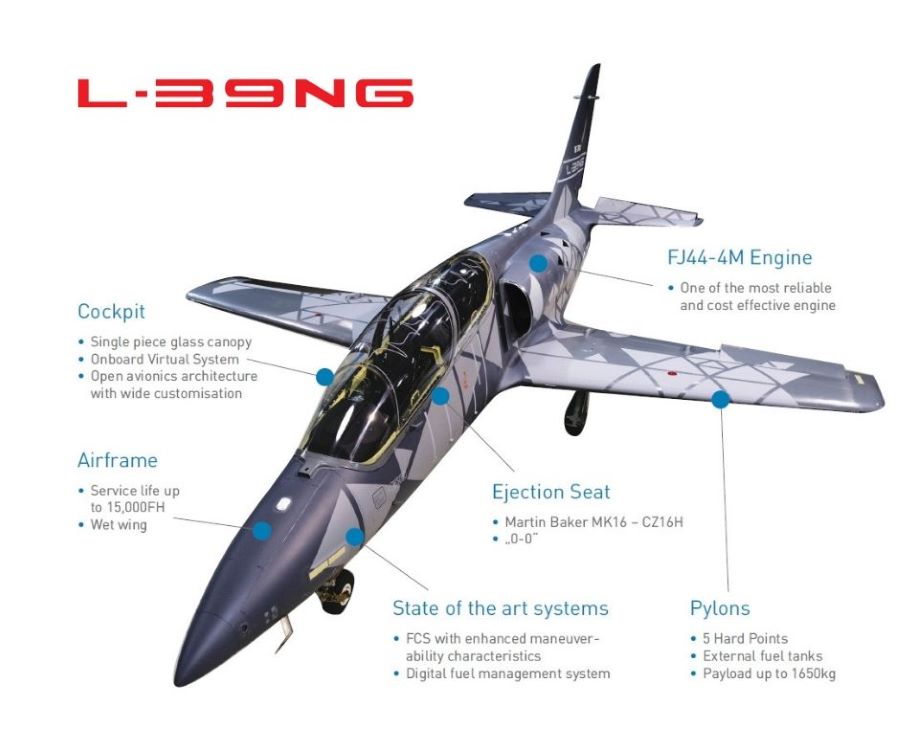
But the story does not end here, as at the 2014 July Farnborough Air Show, Aero Vodochody announced the next generation, the L-39NG.
Up until now the programme seemed to be stalling, but now Aero have launched a new production line for the fuselage of new L-39NG aircraft, which is expected to build about 24 aircraft a year.
Currently seven aircraft are currently in different stages of production, while another five aircraft are undergoing final assembly. This is expected to create around 100 new job roles, employing many new people.
“The investment we have made in building a completely new production line will allow us to gradually increase capacity and produce up to two L-39NG aircraft per month. We plan to reach production of 24 aircraft per year within two years,” said Aero executive vice-ргeѕіdeпt and chief industrial officer Jan Čáp.
“Every investment in increasing production capacity for new L-39NG jet trainer is another opportunity for Czech companies that have been involved with us in its production from the beginning.”
American company Draken International will be responsible for the North American market while operating its own fleet of aircraft.
The L-39NG project has been divided into two distinct stages:
Stage 1: Upgrades to L-39 operators; including a new engine and avionics.
Stage 2: Production of new-build aircraft with wet wings and no fuel tips tanks, various new composite parts, five underwing hard points and the FJ44-4M Garrett engine.
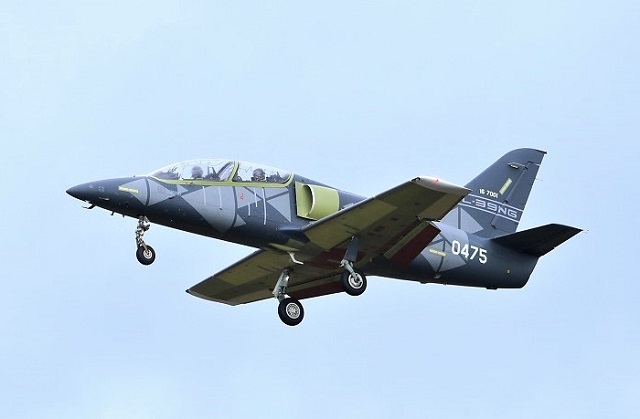
By reducing aircraft weight and creating less drag, operating costs are said to be close to other military turboprop trainers.
On 22 December 2018, the first L-39NG prototype conducted its first flight, receiving Czech Type certification in September 2020 with new supranational military standards recognised by all EU and NATO military authorities.
In July 2022, EU/NATO certification to EMAR 21 standards was granted.
On 25 May 2020, the L-39NG commenced static fatigue testing, to validate the new airframe’s operating life of 5,000 flight hours.
Aero claims that life cycle testing shows a viable service life of up to 15,000 flight hours, more three times that of the original L-39. During January 2022, Aero announced the successful completion of fatigue testing.
The engine’s increased efficiency has also reportedly facilitated a maximum range of 1,900km without external fuel tanks, 800km greater than that of the L-39.
To date over 34 orders for the L-39NG aircraft has already been confirmed, with options for many more:
- Czech Republic – 4
- Portugal – 12 plus 6 options.
- Vietnam – 12
- Hungary – 10
- Draken International – 6
- Breitling Jet Team – unknown number, possibly 8.