Lorem ipsum dolor sit amet, consectetur adipiscing elit. Ut elit tellus, luctus nec ullamcorper mattis, pulvinar dapibus leo.
Click Here
Phelan Green Hydrogen Secures Johnson Matthey Tech for Landmark R47 Billion South African eSAF Project
Phelan Green Hydrogen Secures Johnson Matthey Tech for Landmark R47 Billion South African eSAF Project
Phelan Green Hydrogen Secures Johnson Matthey Tech for Landmark R47 Billion South African eSAF Project
Jarryd Sinovich
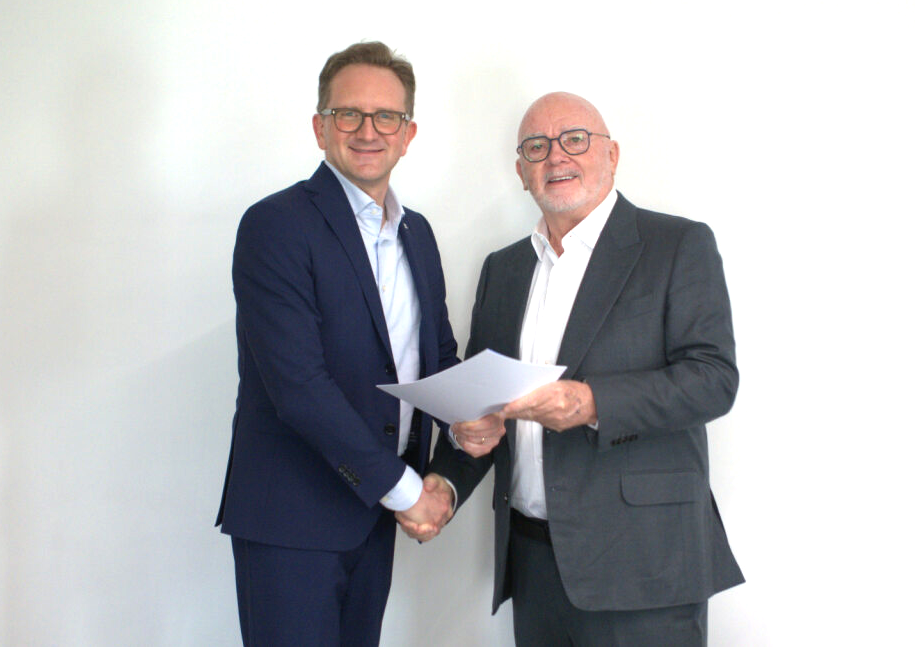
Renewable energy developer Phelan Green Hydrogen has reached a definitive milestone in its push to establish one of the world’s first commercial-scale electro-sustainable aviation fuel (eSAF) facilities, announcing a comprehensive technology licensing agreement with Johnson Matthey Catalyst Technologies (JM CT). The newly secured engineering and licensing framework establishes the technological backbone for a massive R47 billion (more than £2 billion) clean energy development located in Saldanha Bay, Western Cape, South Africa.
Construction on the flagship facility is scheduled to commence by the end of 2026. Formally recognized by the South African government as a nationally strategic green industrial development, the project is engineered to capitalize on the region’s rich wind and solar resources. Operating independently of the local utility grid through its own dedicated renewable energy and battery storage infrastructure, the plant will process captured carbon dioxide, water and green hydrogen into premium drop-in synthetic aviation fuels.
The newly finalized agreement marks the first deployment of Johnson Matthey’s advanced HyCOgen and FT CANS technologies on the African continent. The operational process utilizes a highly efficient catalysed system to transform carbon dioxide and electrolytic green hydrogen into carbon monoxide. This is then combined with additional hydrogen to yield a high-quality syngas. From there, the integrated FT CANS architecture—jointly developed and co-owned by Johnson Matthey and bp—converts the syngas into synthetic crude oil, which is subsequently upgraded using Honeywell UOP’s refining technologies into synthetic paraffinic kerosene.
The initial phase of the Saldanha Bay development is projected to produce approximately 35 000 tonnes of eSAF annually, targeted primarily for export into the heavily regulated European Union and United Kingdom aviation markets. This volume is estimated to satisfy up to 6% of the combined EU and UK mandated eSAF targets for 2030. Upon the completion of all subsequent development phases, the facility’s total output is expected to scale to roughly 140 000 tonnes of sustainable fuel per year.
“Securing these licence and engineering agreements with Johnson Matthey completes the technology backbone of our project,” said Blair Phelan, Managing Director of Phelan Green Group. “We are now ready to turn renewable energy, CO₂ and water into sustainable aviation fuel, and to prove that eSAF can be produced at commercial scale, here in South Africa.”
Alberto Giovanzana, CEO of JM CT, emphasized the international importance of the initiative, describing Phelan Green’s Western Cape plans as a landmark project for the global aviation sector. He noted that the initiative serves as a clear operational signal that sustainable aviation fuels can successfully scale today using proven, bankable technology pathways. By positioning the Western Cape as a highly competitive production and export hub, the project marks a significant step forward in international aviation decarbonization.
Share:
Facebook
Twitter
Pinterest
LinkedIn
NEWSLETTER
Subscribe to our newsletter for new blog posts, tips and news