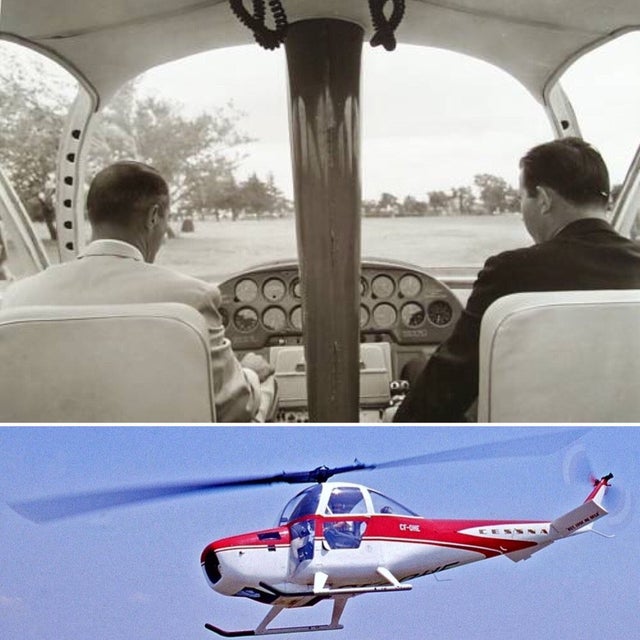
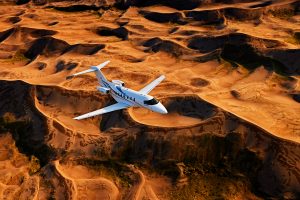
Did you know that the first swept-wing Cessna was a single engine piston aircraft? Cessna also built a four-engine aircraft and even Cessna helicopters.
Cessna XMC
Believe it or not, the first swept wing Cessna was a single engine piston with twin booms, very much like the twin Cessna 337 Skymaster. First flown in 1971, the little Cessna never officially had a name and was called the XMC for Experimental Magic Carpet, and only one example was ever built. The aircraft was built to serve as a research aircraft to further explore various concepts, technologies and manufacturing technologies.
The XMC looked like a futuristic 150, with the same 100hp Continental O-200 four-cylinder engine, weighed around 1,000 pounds, had two seats and fixed gear. The cabin was bigger than a C150, but the wingspan was similar, only six inches shorter.
Cessna used the XMC to evaluate various manufacturing methods, such as metal bonding, to reduce the cost of aircraft production. A later modification of the XMC would see the introduction of a propeller fairing or shroud, intended to explore improvements in propeller efficiency and noise reduction.
Cessna’s interest in the XMC, however, extended beyond the technical aspects. In a 1971 Popular Science interview, Cessna President Del Raskom explained how one of the benefits of the thruster layout was ease of cabin access. He felt this was more difficult in a traditional tractor-propeller layout and he praised the XMC’s wider, lower cab and relatively massive doors.
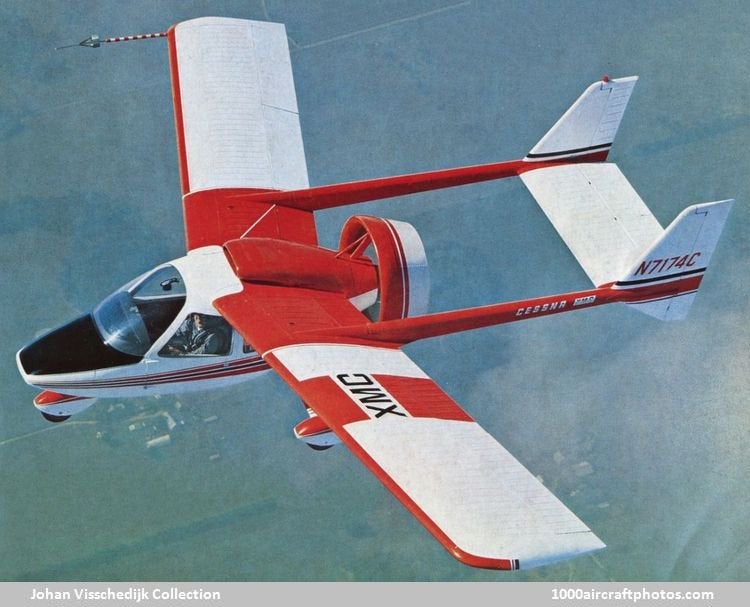
While visibility from the XMC’s cabin was undoubtedly fantastic, the wing sweeping was mostly a function of centre of gravity (CoG). Many aircraft with rear-mounted engines struggle with a centre of gravity that moves too far aft with an empty cabin. The XMC’s wing sweep was used to position the fuel tanks further forward, preventing the aircraft from tipping over on its tail.
The XMC continued to serve its purpose as a research vehicle and then it disappeared from public view altogether, presumably scrapped.
Cessna 620
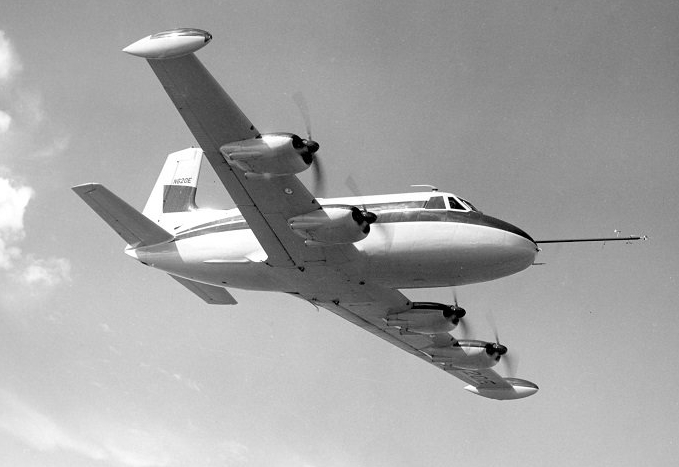
In 1972, the Cessna Aircraft Company explored the market for a business aircraft designed to carry eight to ten executives high above the weather. The aircraft would have four engines, be air-conditioned and pressurised.
Given the go-ahead by management in 1953, the first and only prototype entered flight testing on 11 August 1956.
The moniker “620” was not by accident, as the engine nacelles mimic the early Cessna 310. The aircraft’s model number was considered an inside joke, as it indicated the 620 was twice the aircraft the Cessna 310 was.
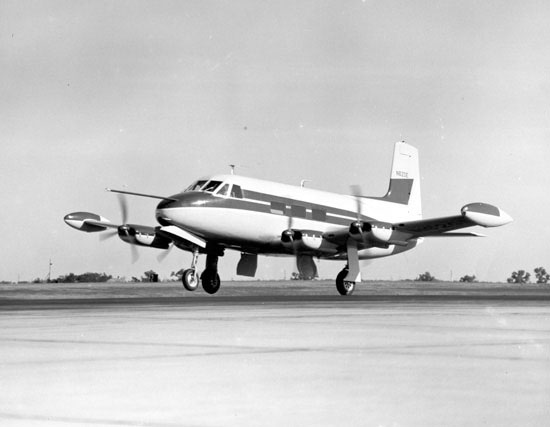
The 620 boasted a large comfortable cabin with an APU (auxillary power unit) to keep the executives cool on the ground. According to test pilots and designers, the 620 program was one of the most successful product development efforts the company had put forward to date. Testing showed the aircraft had an engine-out service ceiling of over 20,000 feet.
So, what went wrong? Executives were interested, but not overly so. Cessna management identified that surplus propeller airliners would soon flood the used aircraft market, driving prices down. Additionally, the 620 would cost more to produce than the surplus airliners, and thus the project was not economically viable.
The project was cancelled in October 1957, and the aircraft sold for scrap.
Cessna helicopter
Unlike the first two examples, this aircraft actually entered production and even secured military orders. This aircraft also enters the record books as the only helicopter ever built by the Cessna Aircraft Company. After acquiring the Seibel Helicopter Company on 14 January 1952 through a stock swap, Cessna began work on the CH-1 design.
The external design was created by Richard Ten Eyck, based on the semi-monocoque airframe style used by Cessna. The CH-1 had a single, two-bladed main rotor and a front-mounted reciprocating engine which gave the aircraft a stable CoG. Cabin seating was behind the engine. The engine location provided “ease of access, efficient cooling and freed the CoG behind the cockpit for use in disposable load”. However, venting the exhaust proved to be a problem throughout the aircraft’s life.
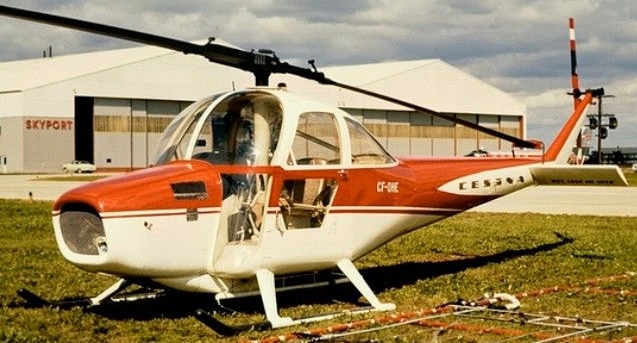
The tail boom size also created aerodynamic problems in hover and forward flight. Reworking the stabiliser permitted the addition of a second row of seating making the helicopter an actual four place helicopter.
On 9 June 1955, the CH-1 received CAA type-certificate 3H10 and was officially certificated on 28 February 1956. The CH-1 was named Skyhook for the civil market, while the US Army designated the CH-1C as the YH-41 Seneca.