

A new kind of light jet
The Pilatus PC-24 stands apart in the light business jet market as an aircraft designed to do what few jets can. Developed by Pilatus Aircraft of Switzerland, the PC-24 combines the speed and altitude performance of a modern light jet with the ruggedness and short-field capability traditionally associated with turboprops. It is an aircraft born directly from operator feedback and shaped by Pilatus’ long experience with the highly successful PC-12.
The PC-12 legacy and customer-driven design
During the 1990s, Pilatus established itself globally with the PC-12, a single-engine turboprop known for its reliability, versatility and ability to operate from short and unimproved runways. As PC-12 operators expanded their missions, many expressed interest in an aircraft offering greater speed and range while retaining the rugged operational profile that defined the Pilatus brand. In response, Pilatus initiated development of a twin-engine jet in 2007, fully funded by the company, with the aim of creating a new category rather than fitting into an existing one.
Public launch and early vision
The PC-24 programme was first publicly referenced in Pilatus’ 2011 annual report before being officially unveiled at the European Business Aviation Convention and Exhibition in Geneva on 21 May 2013. Pilatus chairman Oscar Schwenk described the aircraft as combining turboprop versatility, a medium light jet cabin and true light jet performance. This philosophy would guide every stage of the design and certification process.
Prototype development and testing strategy
The first of three prototypes, designated P01, was rolled out on 1 August 2014, coinciding with Switzerland’s national day. Each prototype was assigned a specific role within the development programme. P01 focused on flight envelope exploration, P02 concentrated on avionics and autopilot integration primarily in the US, while P03 represented a near-production standard aircraft incorporating improvements identified during testing.

First flight and certification campaign
After a brief delay, the PC-24 took to the air for the first time on 11 May 2015 from Buochs Airport in Switzerland. The 55-minute maiden flight marked the start of an extensive two-year certification campaign. By November 2015, the second prototype had joined the test programme, and by mid-2016 the combined fleet had accumulated more than 500 flight hours. Pilatus reported that testing was progressing smoothly, with cruise performance exceeding early expectations during transatlantic evaluation flights.
Achieving certification and performance targets
The third prototype joined the programme in March 2017, and by the time certification was granted, the three aircraft had logged more than 2,200 flight hours. Testing covered extreme temperature operations, icing conditions, structural stress evaluations, bird strike assessments and noise certification. On 7 December 2017, the PC-24 received both EASA and FAA type certification, having met or exceeded its original performance targets. Maximum cruise speed was increased to 440 knots, reinforcing its competitiveness in the light jet segment.
Entry into service and market demand
Production deliveries began in early 2018, with the first customer aircraft handed over on 7 February to PlaneSense. Demand for the PC-24 was immediate and strong. Pilatus sold its initial production run of 84 aircraft within 36 hours of opening the order book at EBACE 2014. By late 2019, the 50th aircraft had been delivered, followed by the 100th delivery in early 2021. Equipped prices have steadily increased, reflecting both demand and ongoing enhancements, reaching approximately $12.2m by 2023.
Airframe design and powerplant
At the heart of the PC-24’s appeal is its unique airframe design. The aircraft features a low-wing cantilever configuration with moderate wing sweep and a straight trailing edge. Power is provided by two Williams FJ44-4A turbofan engines mounted on the rear fuselage, offering a balance of efficiency, reliability and performance. A T-tail configuration and retractable tricycle landing gear complete the design.
Short and rough field capability
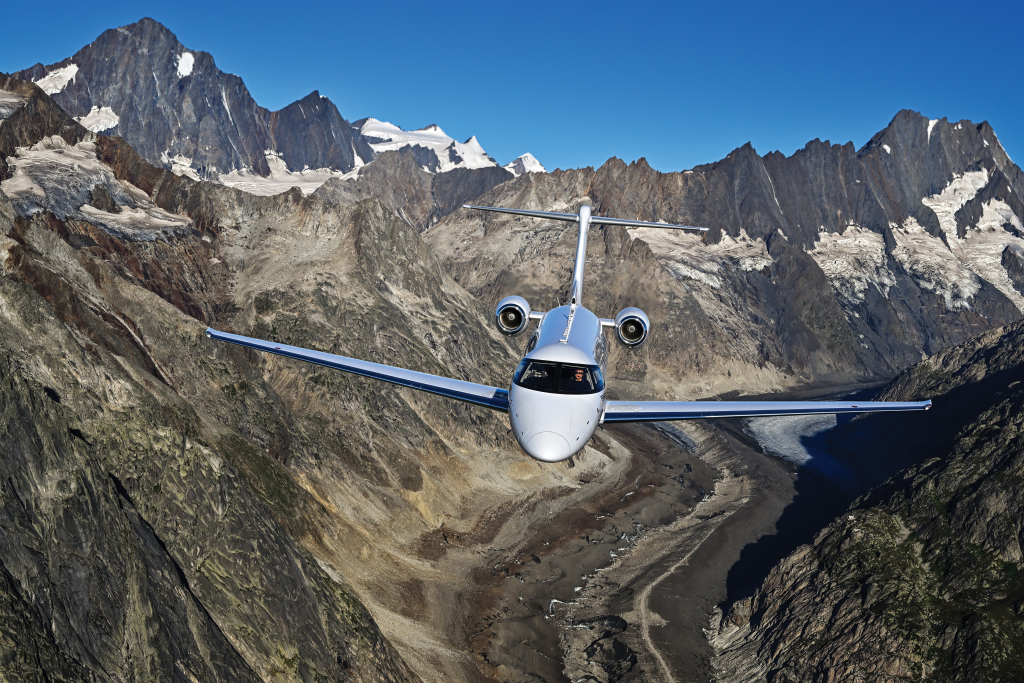
What truly differentiates the PC-24 is its ability to operate from short and rough airstrips. The aircraft incorporates a large double-slotted flap system that delivers excellent low-speed handling and a stall speed as low as 83 knots. Long-stroke trailing-link landing gear smooths operations on uneven surfaces, while dual-wheel main landing gear with low tyre pressure reduces the risk of sinking into soft ground. Protective wing flap surfaces and engine placement help mitigate debris ingestion during gravel and grass operations.
These features allow the PC-24 to take off over a 50-foot obstacle in approximately 3,090ft and land over the same obstacle in about 2,410ft. Certified for operations from grass, wet earth, snow-covered surfaces and gravel runways, the PC-24 expands jet access to locations traditionally reserved for turboprops.
Performance and payload flexibility
Performance figures further reinforce its versatility. The PC-24 offers a maximum cruise speed of 440 knots true airspeed and a service ceiling of 45,000ft. With four passengers, maximum range extends to about 2,040 nautical miles, while six passengers can still be carried more than 2,000 nautical miles. A climb rate approaching 4,000ft per minute allows the aircraft to reach flight level 450 in just over 27 minutes.
Weight and payload capabilities are equally impressive. Maximum take-off weight is 18,740lb with a usable fuel load of nearly 6,000lb. Maximum payload is rated at 3,100lb, and even with full fuel the aircraft can carry more than 1,300lb of payload, offering operators considerable mission flexibility.
Cabin design and interior configurations
Inside, the PC-24 features a spacious cabin designed for comfort and adaptability. Cabin dimensions measure approximately 23ft in length, 5ft 7in in width and 5ft 1in in height, providing ample room for passengers to move freely. The cabin can accommodate up to 10 passengers depending on configuration, with layouts ranging from six-seat executive arrangements to double-club seating, commuter layouts and dedicated air ambulance configurations.
One of the most distinctive features is the large aft cargo door, measuring more than 4ft in both width and height. This pallet-sized door is unique among business jets and allows easy loading of bulky equipment, medical stretchers or cargo pallets. Combined with three cabin exits including overwing emergency exits, the PC-24 is exceptionally well suited for multi-role operations.
Advanced cockpit and avionics
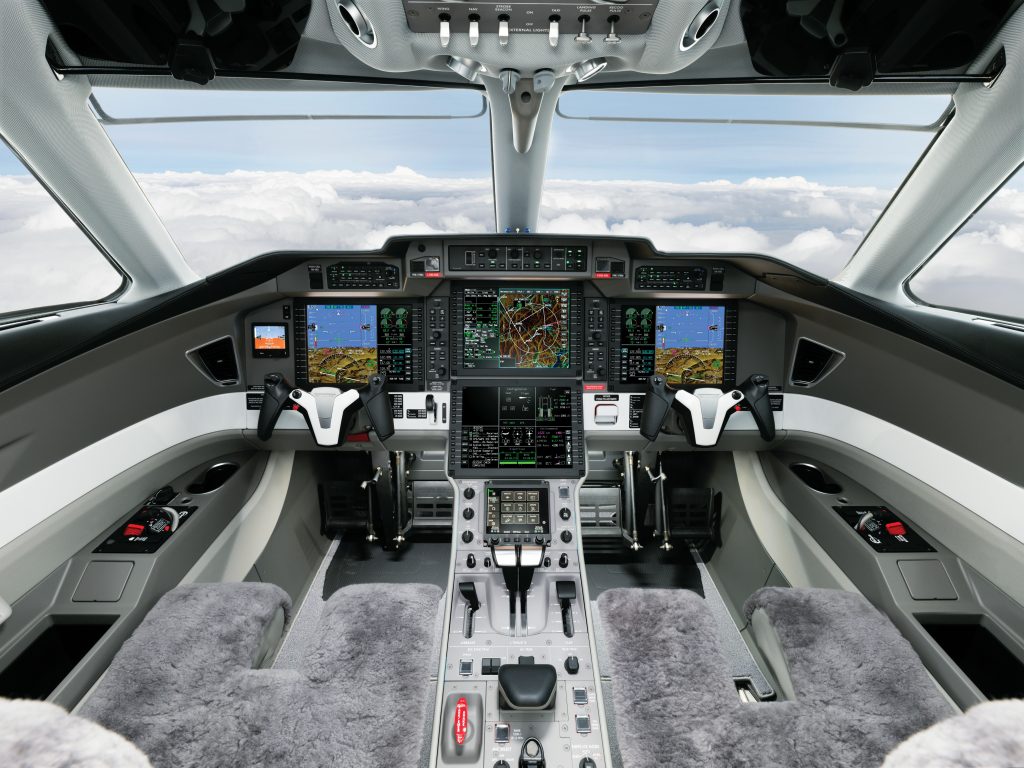
The cockpit reflects Pilatus’ emphasis on reducing pilot workload and enhancing situational awareness. Developed in collaboration with Honeywell, the Advanced Cockpit Environment is based on the Primus Epic 2 avionics suite. The aircraft is certified for single-pilot operations and incorporates advanced automation, touchscreen controls and enhanced flight envelope protection in later production models.
Proven in special mission operations
The PC-24 has found a particularly strong following in aeromedical and special mission roles. The Royal Flying Doctor Service of Australia became a high-profile operator, using the aircraft to replace larger jets while gaining access to remote unpaved runways. Configured with multiple medical beds, integrated oxygen systems and advanced patient monitoring equipment, the PC-24 has proven its value in lifesaving missions.
A category of Its own
In redefining what a light business jet can achieve, the Pilatus PC-24 has carved out a category of its own. By blending jet performance with true rough-field capability and a highly adaptable cabin, Pilatus has delivered an aircraft that challenges traditional assumptions about where jets can operate and how they can be used. For operators seeking speed, flexibility and access without compromise, the PC-24 remains one of the most compelling aircraft in modern business aviation.