Starting up and getting going
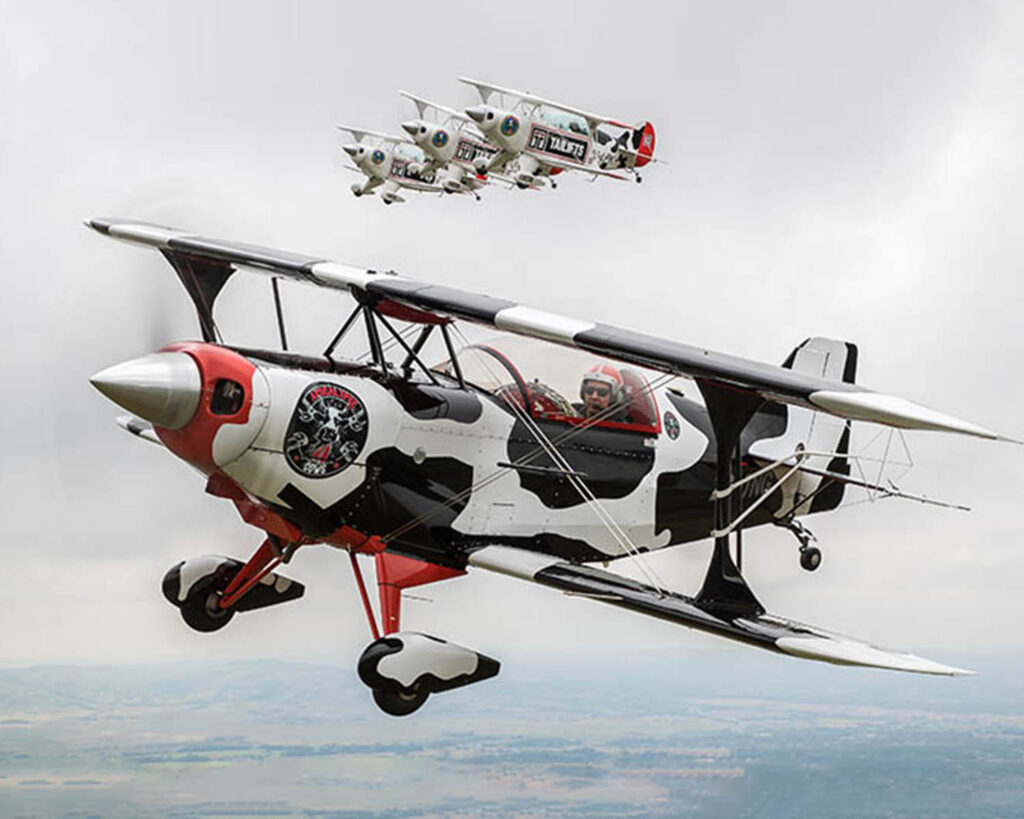
Once you get over the fact that you can’t see very much from the back seat, flying the Pitts Special S2B is like flying any other taildragger. Equipped with a Lycoming AEIO540 engine the start is pretty standard. Having started and being ready to go, you would be well advised to cock the nose of the aircraft to the left or right, enabling you to see what’s in front of you. Sitting in the backseat, your view over the nose is limited. Often what happens is you push your aircraft out to a position on the ramp which is clear of other aircraft and obstacles. While strapping in and getting ready for startup, another aircraft pulls up in front of you without you noticing. You will be surprised at how much of your forward view those 260 Horses block out. I have often started taxiing, cocked the nose and been surprised at what is front of me.
Taxying with that big nose up front
When you start moving you need to keep clearing your nose by zig zagging i.e. nose right, look left, nose left, look right. You got the picture? Keep zig zagging, even if you look down the taxiway and it appears to be clear as far as the eye can see. Keep clearing your nose! Again you will be surprised at what you may find pulling out in front of you.
Taxiing accidents are synonymous with the Pitts Special. The phrase “There are those that have, and those that still have to”, rings true when taxiing a Pitts. Try stay in the “Those that still have to” category for as long as you can.
Unleashing the power and taking off
Line up on the center line with your nose about 5 degrees off runway heading. This allows you to see down the runway. Once cleared for take-off straighten her out onto runway heading. Use the distance between the aeroplane and runway edges as your centering reference. i.e. There should be an equal amount of runway on either side of you.
Open up the throttle smoothly and keep her straight using small rudder inputs. She has a powerful rudder. The tail can be raised pretty smartly due to the powerful elevator and large amount of airflow from the 260 horses over the tailplane. As the tail comes up the nose yaws to the left due to gyroscopic precession. Be aware of this but don’t pre-empt it. Counter smoothly with right rudder as required. Keep her tracking straight with small rudder inputs, dampening your inputs as the speed builds. 80 knots and it is time to get airborne.
Leaving the circuit area
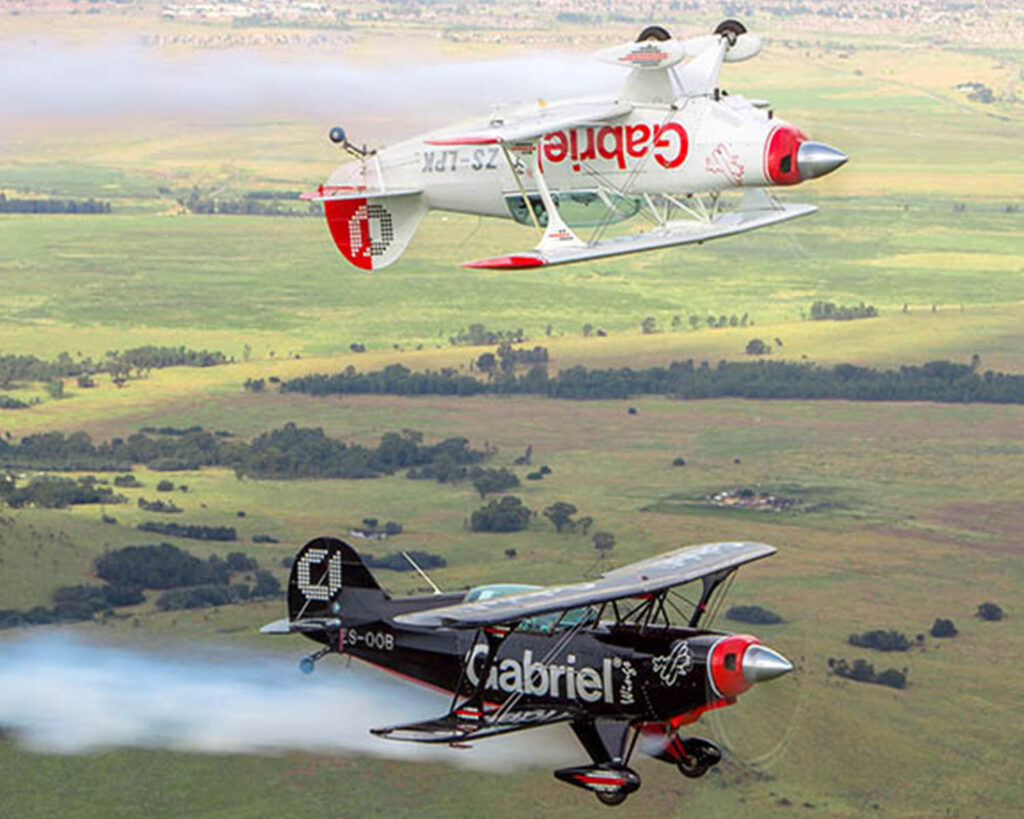
Once airborne you see pretty quickly who was taught to fly properly from the beginning. The Pitts is very different to most aircraft with regard to balanced flight. It is very seldom that a pilot has it wrapped up from the word go. Usually it takes even an experienced pilot a couple of minutes to settle down and keep the ball in the middle. Some pilots need some nagging from their instructors and some pilots need a little more.
It’s a well harmonized aircraft, the same inputs being required from each control when pitching, rolling and yawing. Of the aerobatic aircraft I’ve flown I haven’t found one that has the same excellent control harmony quality, even from some of the better and more capable aerobatic aircraft.
Returning to do battle with the beast
Okay! It is “soil your pants time”! Time to head home and land this beast. Actually, it’s not as bad as the legend and myth make it out to be. I’ve heard of a couple of techniques of which only one makes sense and obviously that’s the only one that I use.
Once on final, put the aeroplane into a side slip with the nose into wind and the opposite wing down. This allows you to fly straight and gives you a good view of the runway. Remember, always nose into wind. Contrary to what you might think, a crosswind is your friend in a Pitts Special. The stronger the crosswind the more you can get the nose of the aircraft out of your way. A wind straight down the runway is a little more difficult, and a gentle 5 to 10 knot crosswind is optimum.
Approach in the sideslip and try carry the sideslip into the flare, looking for a three pointer. Chop the power, flare and remove the sideslip. Most of the time you will either land with a bit of the sideslip still on, or having removed the sideslip and not having touched down, you will find yourself drifting either right or left of center line. Every once in a while, you will get it just right.
Once on the ground she hops and skips a bit. Let her settle and try not make any pre-emptive rudder inputs. Apply rudder when and where needed. Keeping the stick back and in your gut, not letting it bounce around stops the precession and the associated yaw, making your life a lot easier. As she slows apply the brakes firmly but gently and bring her to a stop. It’s over!
Taxi back as you taxied out. Now…. about those pants?
Disclaimer: The information provided in these tutorials is suggestive of reasonable operating philosophies. It should not preclude sound airmanship and proper decision making and should apply to the appropriate sphere of operation being addressed.