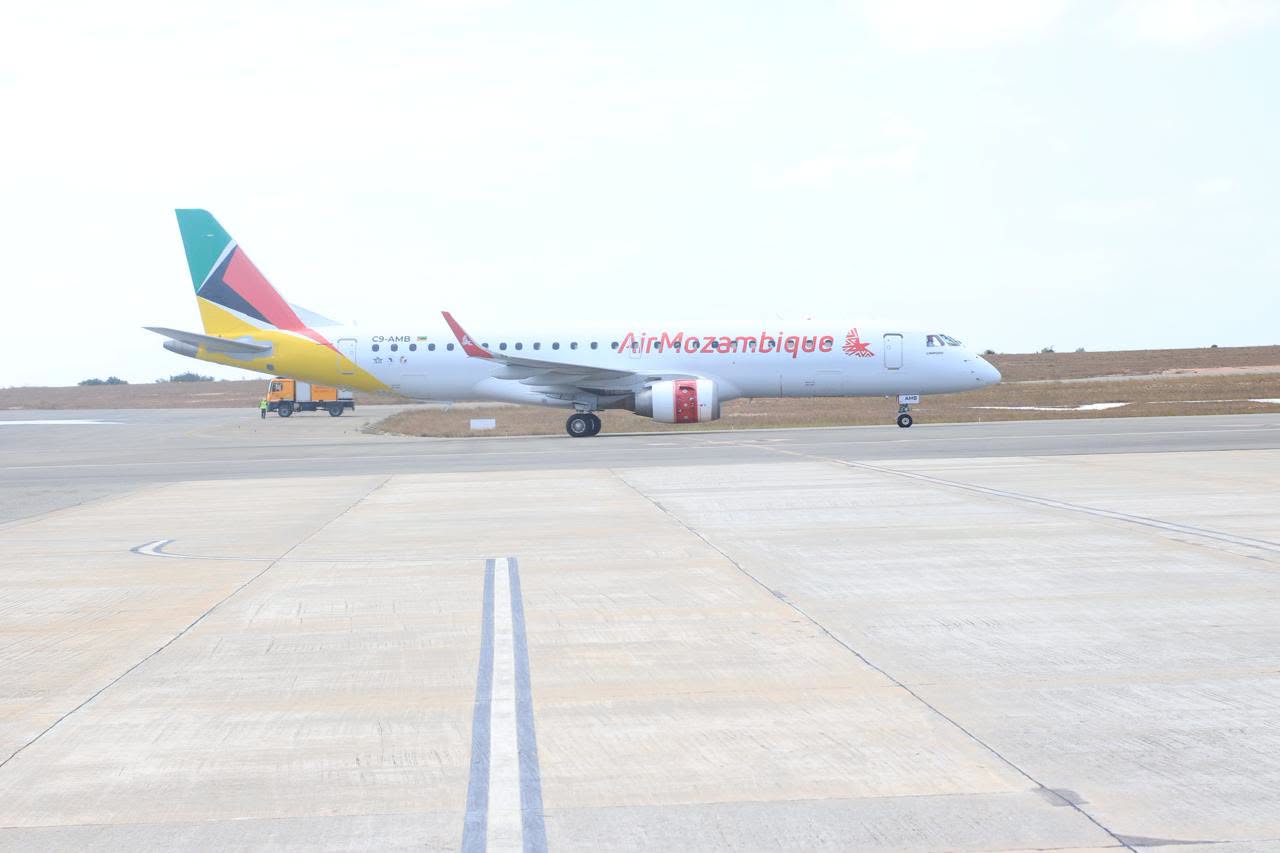
Linhas Aéreas de Moçambique (LAM) has begun operating under the Air Mozambique commercial brand with the first of two additional Embraer 190 aircraft entering service as part of the state-owned carrier’s recovery and restructuring programme.
The first aircraft, named “Limpopo”, made its inaugural flight between Maputo and Nacala in Nampula province, becoming the first of the two newly acquired aircraft to enter service under the new Air Mozambique commercial designation.
The second Embraer 190, named “Zambeze”, is expected to join the fleet at a later stage.
According to Mozambique’s Ministry of Transport and Logistics, the introduction of the new brand and the expansion of the fleet form part of LAM’s broader recovery plan. The plan aims to increase operational efficiency, improve the airline’s financial sustainability and strengthen the quality and reliability of services provided to passengers.
Under the Air Mozambique brand, LAM will also introduce a new visual identity as part of its wider transformation strategy. The initiative was launched a year ago as a priority by Mozambican President Daniel Chapo.
The entry into service of the two Embraer 190s comes as LAM continues to rebuild its operational fleet following several years of difficulties linked to a limited number of aircraft and a lack of investment.
LAM management committee chairman Dane Kondic said the airline is expected to have 10 operational aircraft following the arrival of the two Embraer 190s. This compares with just three aircraft when the current management took office in May 2025.
The airline currently operates a combination of its own aircraft and partner aircraft. LAM is targeting a fleet of 12 aircraft by the end of 2026 with increased operational capacity identified as a key priority for improving domestic connectivity across Mozambique.
Transport and Logistics Minister João Matlombe said the airline’s recovery is an important part of the Government’s strategy to improve mobility and support economic and territorial integration across the country.
Mozambique’s geographical size and the distance between major economic centres make reliable air connectivity particularly important for the movement of people, goods and services.
Matlombe also stressed that the recovery of LAM would require more than simply adding aircraft to the fleet. The process includes reorganising the company, controlling costs, improving management processes, streamlining operations and strengthening its overall operational capacity.
The restructuring of LAM has also included changes to the ownership structure. In 2025, Hidroeléctrica de Cahora Bassa (HCB) acquired a 25.2% stake in the airline while Empresa Moçambicana de Seguros (EMOSE) and Caminhos de Ferro de Moçambique (CFM) each acquired 15.4%.
With the introduction of the Air Mozambique brand and the expansion of its fleet, LAM is seeking to establish a more efficient and sustainable operation while improving connectivity between Mozambique’s major cities and economic centres.