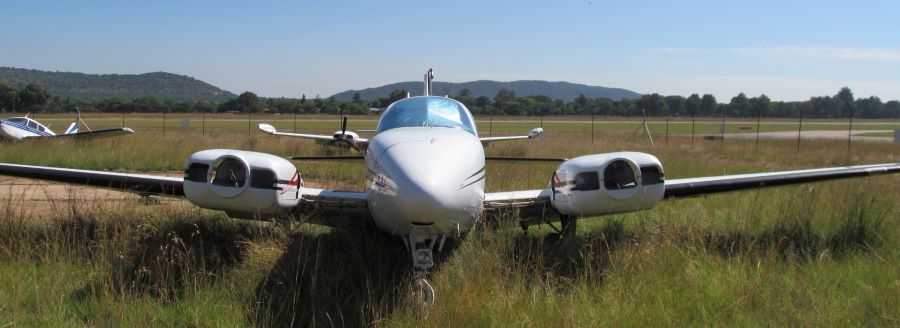
The future of the piston twin looks bleak, and there are several reasons behind this.
In 1979, 33 different piston twins were available with around 3 000 twins sold worldwide. In 2019, 2 658 general aviation aircraft were sold from singles to twins. Today, if any aircraft manufacturer sells over 500 aircraft, this is considered excellent.
New-design piston twins started coming to market in 1952 with the Twin Bonanza and the Aero Commander. The Cessna 310 and Piper Apache followed shortly, with more models added every year for the next 20 years.
Back in the 1950s and ’60s, virtually all pilots who went beyond a private pilot also got a multi-engine rating. The usual progression was private, commercial, multi-engine, flight instructor and instrument rating. Twin training was available at almost every airport.
Many of the WWII pilots were multi-engine qualified, so when new piston twins came along, there was a ready an eager market.
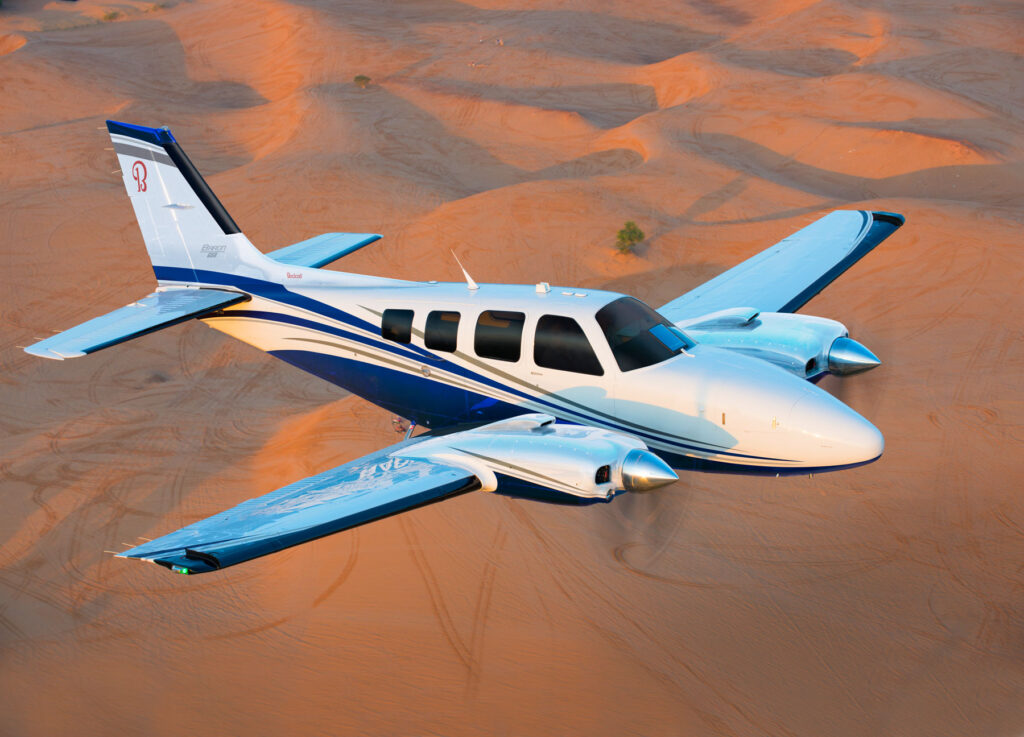
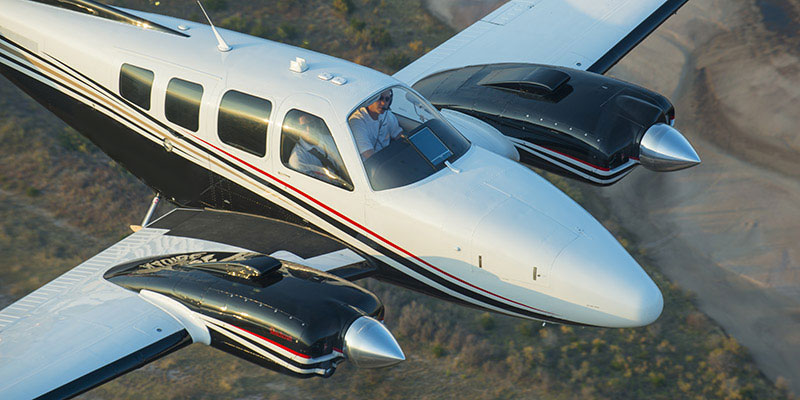
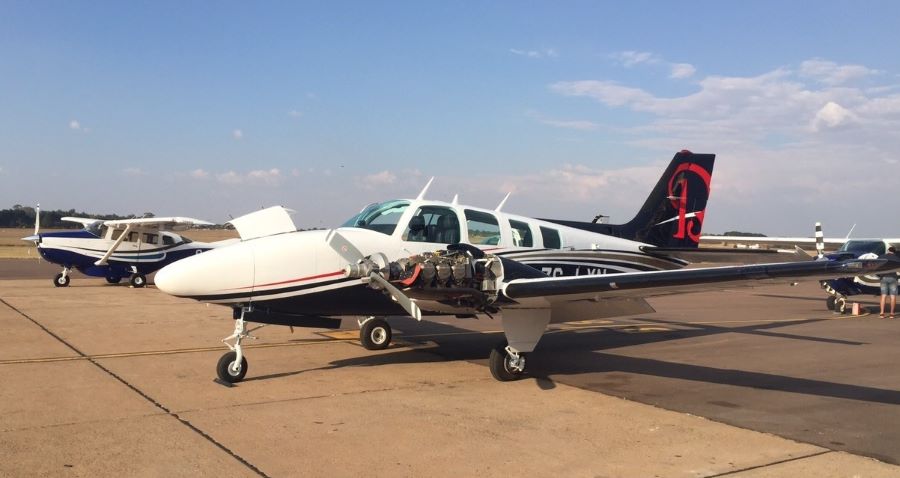
Today, Beechcraft still builds a few Barons, Piper some Senecas and Seminoles, although mostly on order. Diesel powered aircraft like the Diamond Twin Star are also popular.
Insurance
Initially insurance companies were convinced twins were safe. It took insurance underwriters a long while to realise that they were paying out proportionately more money on twin wrecks than single wrecks.
Over the existing lifespan of the piston twins, the insurance folks have gone from giving very favourable treatment to twins to charging ever higher premiums and requiring annual training for twin pilots. A complete turn-around.
Accidents
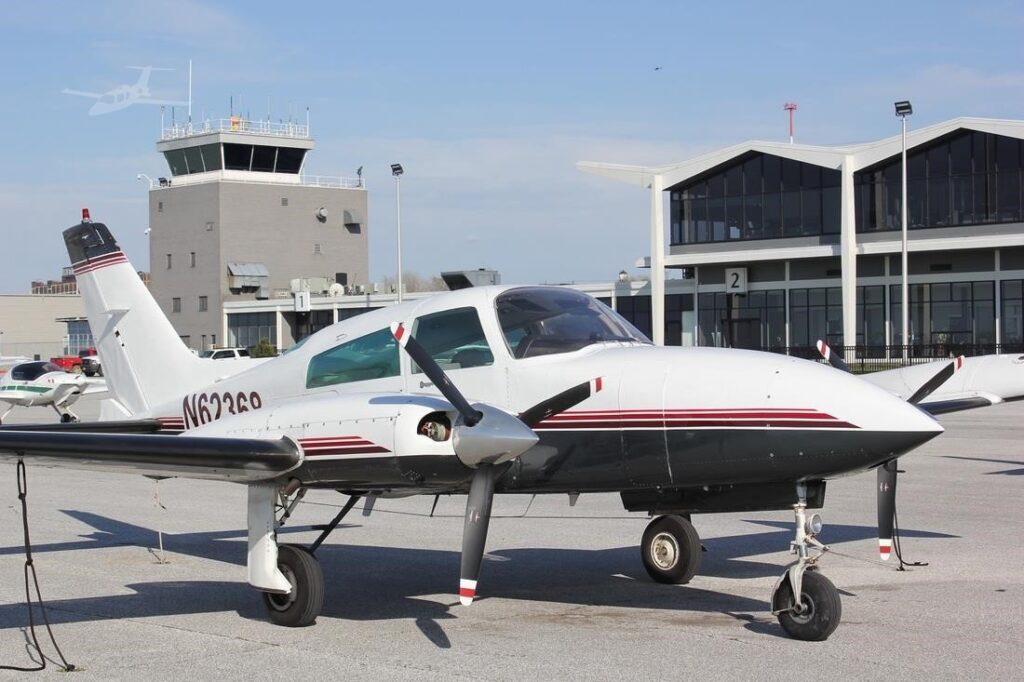
Many accidents were happening, especially during training, and it was found that the cause of all these accidents related to an insane US FAA requirement – ‘do minimum engine-out control speed demonstrations as low as possible, but not below 500 feet’. The rest of the world had similar results, as the US FAA is often used as a guideline in regulations. The FAA took a long time to gain sense and logic.
Today, most piston twin accidents are related to engine failure on takeoff. The live engine is producing maximum power with the aircraft at low airspeed, and exacerbating the problem is incorrect control inputs.
Pilots also tend to do things with twins that they wouldn’t do with singles; such as fly IFR at night or in bad weather. A pilot who flies trips in a twin that he wouldn’t do in a single is looking for trouble. Mother Nature doesn’t care how many engines you have, the ground is just as hard for a twin as it is for a single.
Today, when measured per 100 000 hours, there’s little difference in accident rates between high performance singles and piston twins.
Are twins safer than singles?
Twins certainly seem safer, after-all, two engines mean you have a redundancy if one fails. There’s no denying that flying over treacherous terrain like mountains, vast bodies of water, at night or in IFR conditions, a second engine gives you a better safety margin.
Because of this, twins enjoy some continuing success with pilots and owners. Accidents don’t discourage those who still want a twin.
What changed?
Simple mathematics. Engine overhauls and fuel per hour are nearly double for a twin. The twin can climb faster and cruise faster but not at the ratio of the additional cost. It is just more efficient to do the flying with one engine.
Multi-engine training is far from being as available today as it was years ago. Not many schools have a twin anymore.
Another real problem; people who are coming into general aviation today don’t know that they are supposed to want to “step up to a twin.” Nobody has told them. If anything, a newbie pilot would explore the subject and decide that only professional pilots are supposed to fly twins.
It is also noted that the demand for twins has changed considerably. Aircraft salespeople report that there are fewer customers enquiring about twins. The factor is once again money. New twins are expensive.
Used examples can be bought for a lot less money, and some at extreme bargain basement prices, but then again, maintenance costs raise their ugly head. Getting an older aircraft up to spec and airworthy is costly. Fact, many Bonanza’s sell for more money than a Baron.
Another problem is remaining current. With the extreme price of fuel and overhauls, fewer pilots are flying. Flying the minimum amount of hours required is not enough to remain competent.
High-performance singles and turboprops can do the job of a piston twin
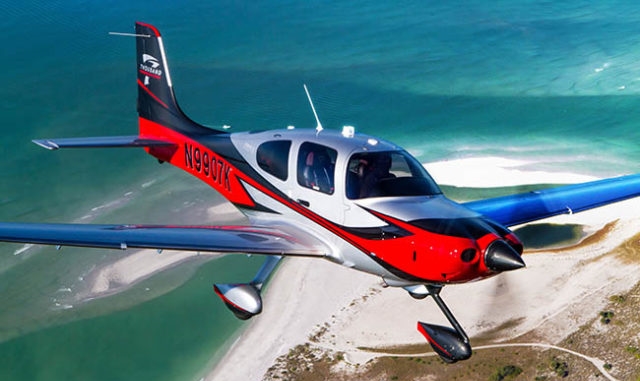
Aircraft like the Cirrus climb almost as well as twins and cruise almost as fast and have FADEC (Full Authority Digital Engine Control). They also have features that insurance companies like. The gear is always down and there is also a parachute.
Newer singles also have dual charging systems, vacuum pumps, ice protection and weather radar that were only available in twins 40 years ago.
Twin turboprops can climb at max weight with one engine out, which kind of side-lines piston twins.
If anything, these newer aircraft almost guarantee there won’t be a lot of new basic twins flooding the market. They are tough competitors.
Conclusion
Piston twins used to be a step-up market, but they have been replaced by more efficient singles that all fly at similar speeds and altitudes. Given the low rate of twin production and the age of the fleet worldwide, there will be fewer and fewer piston twins flying around in future.
(Source – Richard L Collins and J Smith)