
I think it was General Chuck Yeager who said that the most intensively demanding flying was air combat, because in that context another person is using all their skill and human creativity to shoot you down, resulting in an unpredictable situation where the consequences of coming second could be extremely dire. He placed experimental test flying and airshow flying not far from the level of intensity experienced in combat. Test flying because of the unknown that is being probed, and airshow flying because of the dangerous mix of ego and a hostile unforgiving low-level environment.
I would suggest that in terms of demanding intensity, competition aerobatics is not too far behind airshow and test flying. Not thankfully because of any dire consequences, but more because of the combined extreme physical, mental, and emotional demands that are placed on a pilot in a short 5-to-8-minute competition flight.
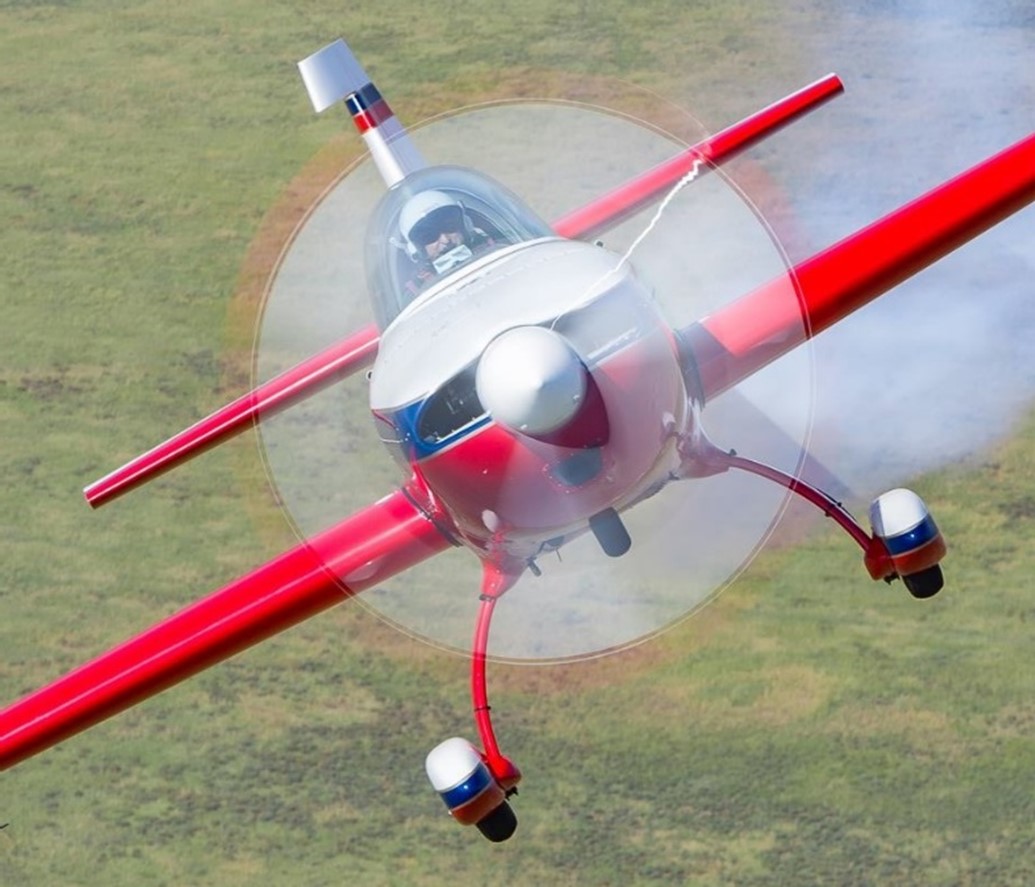
The physical demands are immense, aerobatics places more G force on the human body than any other sport. Take for example a demanding but not at all uncommon figure often flown in the advanced or unlimited categories. A negative “push” half loop with a four-point hesitation roll on the top following by a snap roll, and then a hard push down and around to the inverted, with a three-quarter roll at the bottom and quarter roll the other way.
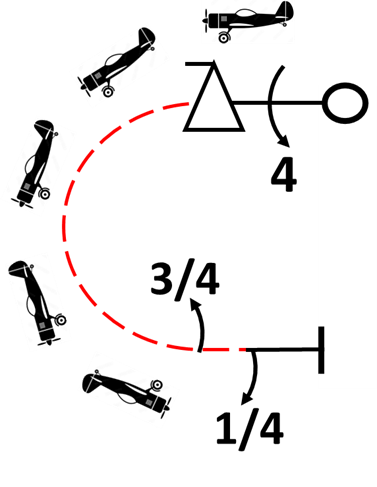
Regardless of the airplane you fly, this figure it is going to hurt. One ideally ought to be very slow on the top before the push around, because you are going to accelerate tremendously as you push the nose down and under. But in order to execute a neat 4-point roll followed by a snap roll in the opposite direction, you need speed, and so you are forced to start the push at between 80 to 90 knots, you risk being through VNE at the bottom. And so, if you want to control speed, and also minimize height loss to under 1000’ you have to push like hell (as in use both hands and all your might) about -6G to -7G will be required. This will result in painful bruising on your thighs, and sometimes even bleeding as even the most padded of seat belts cut into your legs. This figure will also result in red blood shot eyes as the fine capillaries in the whites of your eyes burst with the intense rush of blood to the head.
At the bottom of the negative half loop, you will now be close to 200 knots; at that speed the airplane is super twitchy and difficult to control precisely, so achieving an accurate three-quarter roll that stops precisely on the knife edge, and then immediately reversing that for a quarter roll the other way neatly, without bobbling and fishtailing around the sky, is never going to be easy, especially in an airplane that rolls over 400 degrees.
I have never seen a pilot fly figures like this and not land totally exhausted, and always drenched in sweat even on the coldest of days. Aerobatics at this level is physical.
In terms of the mental intensity. The best way I can describe it is like some sort of cruel college or military initiation ceremony, where a trembling initiate (or victim) is given a very short time to memorize and repeat a complex, and long piece of literature which must then be recited flawlessly from memory in front of a taunting audience. Moreover, this feat is to be achieved after the poor initiate (victim?) has been forced to down many shots of alcohol in quick succession beforehand.
In aerobatics, it’s not long-winded literature, but rather a complex 14 figure sequence that must be memorized. And it’s not alcohol or taunts that distract, but +10G and -6G forces, coupled with constant need to always try figure out where exactly you are positioned in the aerobatic box; where to need to be, and how to fight the wind to get there without the judges noticing any skewing of your flight. Mental overload is quickly reached, and the simplest tasks become so difficult.
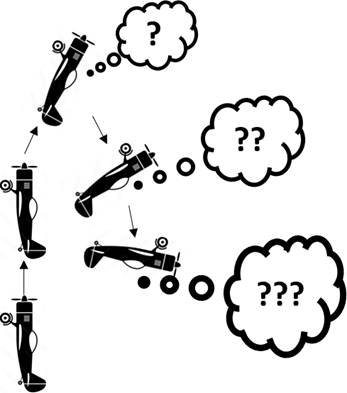
Most competing pilots have experienced that panicked feeling of wondering “what comes next? what do I do now? must I roll left or right??” as they frantically try scan a crowded sequence card, to figure out what to do next. The airplane quickly runs out of energy, while the pilot runs out of ideas and options and soon falls out of the maneuver. You can almost see the question marks popping out of the cockpit in a proverbial thought bubble. Cruelly amusing to watch, but horrible to experience.
And then there are the emotional demands. This is perhaps the most intense aspect of competition aerobatics, and this is always highly personal. This is not some esoteric matter, aerobatics is, after all, an aesthetic sport, and how the airplane presents to the judges matters. The mood of the pilot directly influences flying style and presentation. It’s intangible but still very real, if you want the flight to appear exuberant, then you must feel exuberant.
The late afternoon on the final day of any multi-day aerobatic contest always presents an epically dramatic scene. There are no large crowds here, and very little fanfare; yet the intensity of focus will seldom be found on any other flight line. With a low sun the light is moody; pilots are waiting anxiously by their aircraft lined up on the apron, preparing for their upcoming flights, like gladiators waiting to enter the combat arena. Competitors are largely silent whilst another aircraft snarls and growls overhead, but few notice that.
From this moment until after your flight is an intensely lonely time, there is very little interaction, and everyone respects everyone else’s space.
Some pilots are pacing up and down dancing their upcoming sequence, others leaning against their fuselage with headsets on listening to music, another is sitting on a wing holding a hand over his face to block out any distraction as he imagines his flight. Another is already strapped into cockpit, and you can see the controls move in the still stationary airplane as he hand fly’s his sequence with eyes closed before even starting the engine.
See the guy at the end? a relatively new contender, a popular guy loaded with natural talent and huge determination, he is fighting hard to prove himself and build a reputation. The pilot next to him, quite the opposite, he is a veteran contender, and he couldn’t mess up an excellent reputation established over a lifetime even is he tried, his demons are different- he is fighting his body and mind and wondering when age will force him to stop all this. Next to him is the current title holder, that always brings additional pressure. And the guy next to him, he comes from an illustrious flying family, and he has huge legacy to uphold, another unnecessary pressure. More than once have I seen a tear shed on a flight line. And without a doubt, all these pilots are absolute gentlemen.
At a recent contest after a grueling flight, a fellow competitor asked me how I regarded the aerobatic box, what I thought about that 1000m imaginary cube in the sky. Was it a playground for me? Perhaps a gladiatorial ring to compete and fight in? Maybe a giant 3D stage to express oneself in?
I replied that to me it has been all of these things at different times over the years, but now I regard it as simply a ‘vault of truth’ in the sky, and some days the truth that it reveals about yourself is delightful, and other days very painful; because competition aerobatics is much more than simply flying an airplane like a pilot possessed.