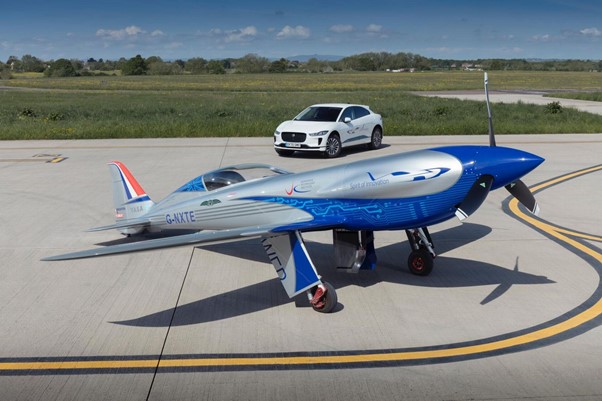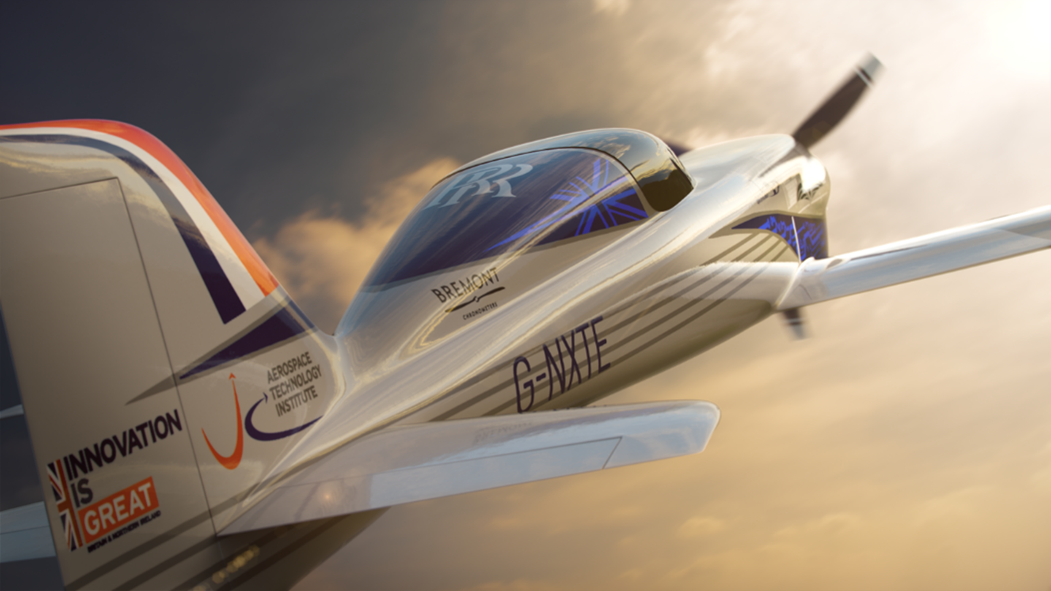

The first flight of the all-electric ‘Spirit of Innovation’ aircraft took to the skies with the most power-dense battery pack ever assembled for an aircraft. Propelled by a 400 kW (500 hp) powertrain consisting of three motors connected to a 6,000-cell battery pack, this is another step towards the aircraft’s world-record attempt and another milestone on the aviation industry’s journey towards decarbonisation.
Warren East, CEO, Rolls-Royce, said: “The first flight of the ‘Spirit of Innovation’ is a great achievement for the ACCEL team and Rolls-Royce. We are focused on producing the technology breakthroughs society needs to decarbonise transport across air, land and sea, and capture the economic opportunity of the transition to net zero. This is not only about breaking a world record; the advanced battery and propulsion technology developed for this programme has exciting applications for the Urban Air Mobility market and can help make ‘jet zero’ a reality.”
Business Secretary Kwasi Kwarteng said: “The first flight of Rolls-Royce’s revolutionary Spirit of Innovation aircraft signals a huge step forward in the global transition to cleaner forms of flight. This achievement, and the records we hope will follow, shows the UK remains right at the forefront of aerospace innovation. By backing projects like this one, the UK Government is helping to drive forward the boundary pushing technologies that will leverage investment and unlock the cleaner, greener aircraft required to end our contribution to climate change.”
The aircraft took off from the UK Ministry of Defence’s Boscombe Down site, which is managed by QinetiQ. The site has a long heritage of experimental flights and the first flight marks the beginning of an intense flight-testing phase in which Rolls Royce will be collecting valuable performance data on the aircraft’s electrical power and propulsion system. The ACCEL programme, short for ‘Accelerating the Electrification of Flight’ includes key partners YASA, the electric motor and controller manufacturer, and aviation start-up Electroflight.
The ACCEL team have continued to innovate while adhering to the UK Government’s social distancing and other health guidelines. The first flight of the modified Sharp Nemesis NXT was due in May, with the record attempt tentatively set for the first half of 2021. However, those milestones had to be pushed back due to the COVID-19 pandemic causing additional impact on suppliers. In addition, a “deliberate design decision to get maturity into the aircraft” before the first flight slowed the pace slightly.
Half of the project’s funding is provided by the Aerospace Technology Institute (ATI), in partnership with the Department for Business, Energy & Industrial Strategy and Innovate UK. In the run up to COP26, the ACCEL programme is further evidence of the UK’s position at the forefront of the zero-emission aircraft revolution.
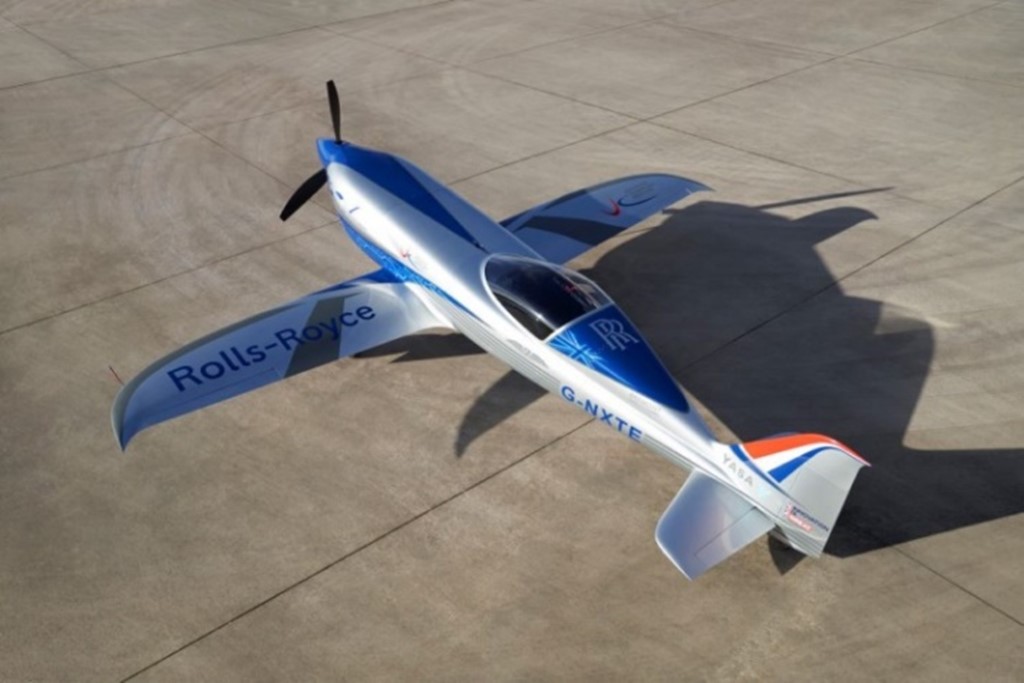
The world speed record attempt is hoped to capture the imagination of the public in the year that the UK hosts COP26. Rolls Royce is expecting the aircraft to reach speeds in the region of 300 MPH (480 KMH) or more. COP stands for Conference of the Parties, and the summit is attended by the countries that signed the United Nations Framework Convention on Climate Change (UNFCCC) – a treaty that came into force in 1994. The UK will hold the summit in 2026.
Around 20 flights are planned prior to the record attempt.
Rolls-Royce is now able to offer customers a complete electric propulsion system for eVTOL (electric vertical takeoff and landing) or for future commuter aircraft. Rolls Royce said they will be using the technology from the ACCEL project and applying it to products for these exciting new aviation markets.
“The characteristics that ‘air-taxis’ require from batteries are very similar to what is being developed for the ‘Spirit of Innovation’ aircraft,” said a spokesman from Rolls Royce.
In addition, Rolls-Royce and aircraft manufacturer Tecnam are currently working with Widerøe, the largest regional airline in Scandinavia, to deliver an all-electric passenger aircraft for the commuter market, which is planned to be ready for revenue service in 2026.
Rolls Royce want to ensure that their ‘new’ products will be compatible with net zero operation by 2030, and all their other ‘existing’ products to be compatible with net zero by 2050.