
By Elton Bondi
There is an old saying that goes something like this,
“If you want to know the true character of a person, watch how they handle three things: money, alcohol, and people who can’t benefit them.”
I could add a fourth, “watch how they behave at an aerobatic contest that they are competing in”.
Being intimately involved with competition aerobatics for over 25 years at a regional, national and international level leaves me hugely grateful to have had more than my fair share of both triumph and on occasion defeat too.
During all that time I have flown with, and against, many hundreds of different pilots. Regardless of experience or nationality most pilots inevitably exhibit a number of common behavioral patterns, reflecting how each competitor manages contest pressure. Each behavioral archetype revealing much about the true character of that pilot.
I found that airshows too have their unique challenges, but as rule, are less psychologically and emotionally intense than competitions.
Some of these ‘contest personas’ (as we refer to them) are totally in line with a person’s normal character, and some not at all. Often, we see typically lighthearted jovial characters become unapproachably intense and secluded at a contest. And on other occasions we see the opposite, where a normally taciturn and reticent introvert mysteriously transforms into an extraverted raconteur on competition day.
Making things a little more complex is the fact that there is a palpable change in tension and behavior as a competition progress. They always start off fairly relaxed, but as different flight programs are completed the intensity builds to a crescendo at the final flight program of any contest. It is interesting to watch a pilot’s behavior evolve during the contest, some people becoming more relaxed with growing confidence as they get into their groove, and others who started strong soon begin to fall apart as the pressure mounts.
There are two extreme behavioral archetypes, and then there is everything in between –
On one hand, there are competitors that don’t appear to take the competition seriously at all. For them it is like a simple day of flying fun in the sun with friends. They seem to not care how well they perform. Nonchalantly laughing off bad scores, and similarly not getting excited or enthused with a good score. They behave in a super outgoing manner, and are seen constantly joking around with everyone, having their best time with not a care or goal in the world other than to have fun in every moment.
Then there are the super intense pilots, people who park their airplanes far from all the other aircraft on the flight line. They come to the briefing just as it commences and leave the moment it is over to avoid informal conversation with anyone before or after the formalities, and they spend the entire contest away near their airplane, isolated and totally unapproachable. Often sitting alone under their wing listening to music. Merely walk towards those people and even at a distance you will get a distinct aura that you are not welcome.
And then there is everything in between, pilots who are relaxed and social until 30mins before their flight when they quietly melt into focused seclusion. Pilots who start the contest very silent and tense but then relax and become highly talkative once their first flight is done. Pilots who start relaxed and become intensely serious when they see that their first few flights have scored well, and they suddenly realize that they are in with a shot at a title. And then there are pilots who maintain a consistent demeanor always no matter what.
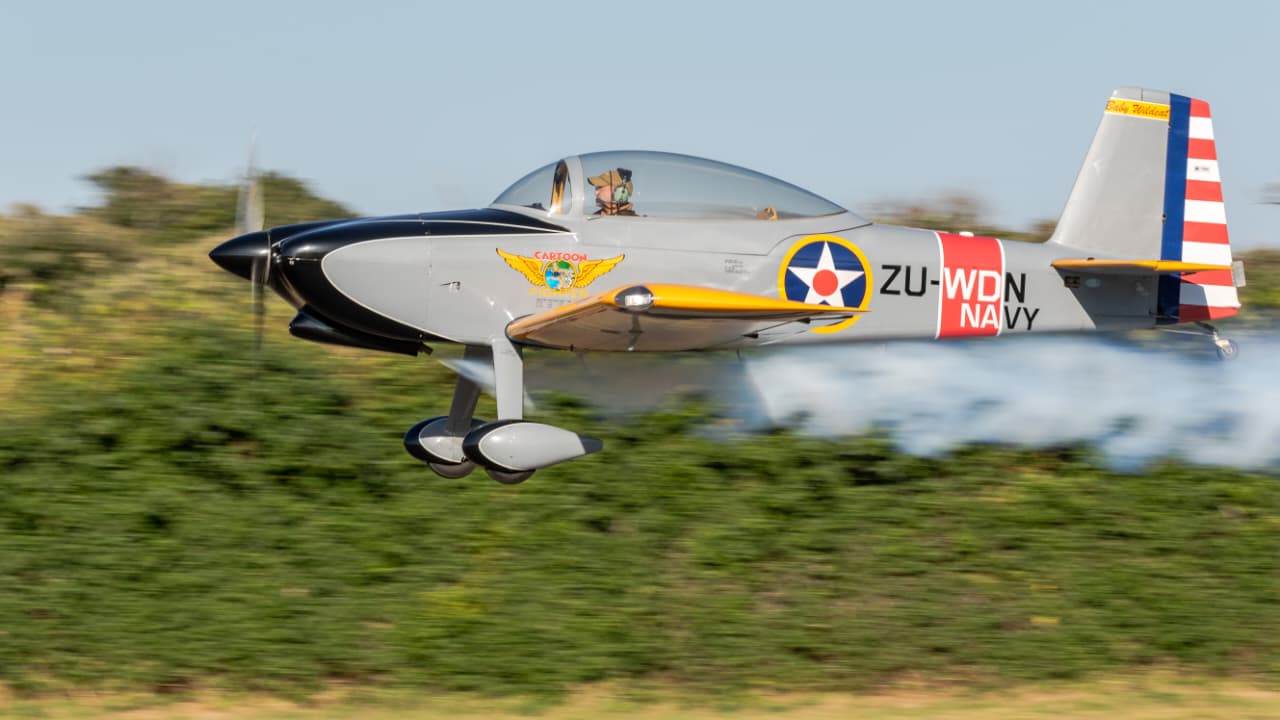
I have also seen some competitors being really mean and unsportsmanlike at a contest by saying and doing uncharacteristically awful things to ‘psyc-out’ or distract rivals. And I have also seen some of the most generous acts of kindness where a pilot will help a rival sort out a technical snag on their airplane instead of focusing on their own imminent flight. Similarly, I have seen pilots give wrong information to mislead competitors. And I have seen others immediately after landing literally run across the apron to the next competitor who is strapping in, in order to alert them of an unobservable and unwelcome occurrence such as winds that reverse direction at higher altitudes.
I am not an amateur psychologist and have little interest in observing peoples behavior. The reason why all this mattered to me, is because one very quickly discovers that talent and skill are only half of the requirement to be victorious at an aerobatic contest, big game temperament is other half. In other words, aerobatics, like most extreme activities, is largely a head game.
Here is the frustrating thing, I could not find a specific behavioral pattern that worked consistently. I have seen super intense introverts both triumph and fail, just as I have seen nonchalant extroverts and jokers also win and sometimes lose. There seemed to be no single winning formula.
I did, however, begin to notice a few things about myself. Firstly, I would typically score better at smaller, more informal local contests, than at larger, more important national or international events. Clearly, I had a problem handling big game pressure.
My friends would normally regard me as the social team joker, yet at a contest I became very withdrawn and inwardly focused, not really interacting with anyone until after my last flight. I used to wind myself up so much prior to a contest flight, that I could not give of my best. I once became so distracted and overwhelmed by the awesomeness and the consequence of a major contest, that I flew my entire sequence in the wrong direction, scoring zero for an entire program.
And so, I tried different strategies to relax while flying at a contest. On one occasion I even had the foolish audacity to listen to music during my competition flight, stupid idea. Although I did on that occasion fly with smoother precision, scoring higher than I normally would for nearly all figures, I also got so distracted by the music, and left out a figure during my melodic euphoria, devasting my overall score. Music was not the answer.
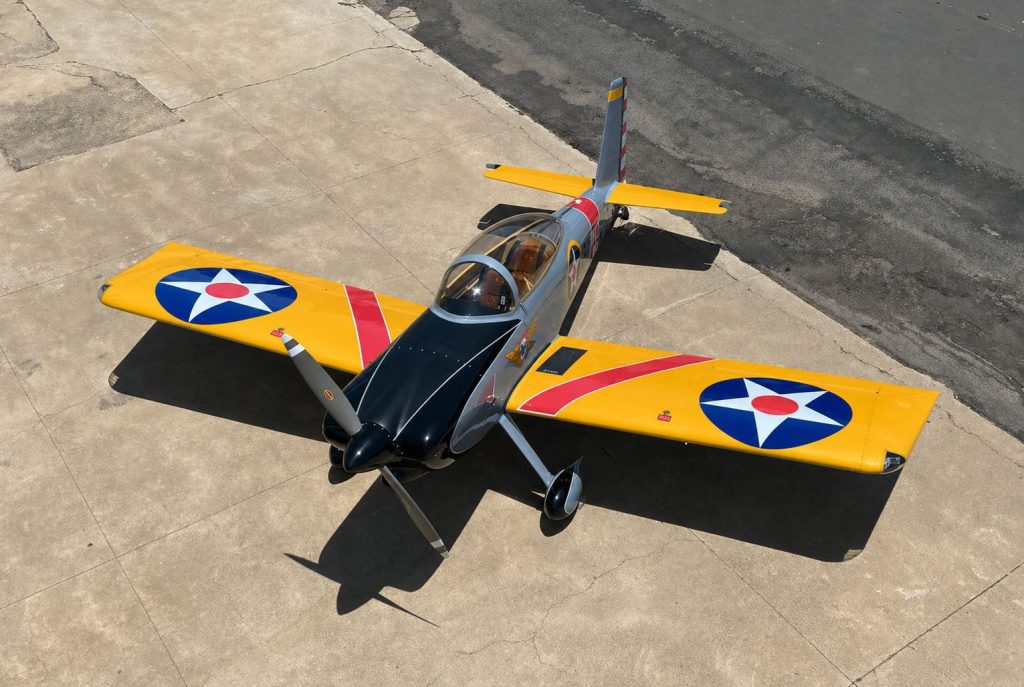
I also noticed that I always fly much better at training camp than at the actual contest.
And so, my strategy was to go to competitions, and to participate by following all the rules, but at the same consciously deciding that I was not going to actually compete with anyone. In other words, I would focus not on trying to win, but rather on trying to achieve the unachievable – fly the perfect flight. I consciously did not care about my scores, choosing to not even see the scoresheets of any of my flights until after the entire contest was over. And I certainly would not worry about the scores of my fellow competitors.
It took some effort but after a time ranking made no difference to me, I did not care where I placed and so became immune to competition pressure. The only contest was with myself and no one else, I just had to do better than I did last time, where others placed relative to me was of no consequence. And it worked.
In my early competition years my attitude when diving into the aerobatic box for my first figure used to be something like – “oh boy this is it, this is the moment I had better not mess up”. That sort of mental dialogue sets a negative tone from the start.
With my new approach my attitude soon became “here I am on my own in this cockpit, in a brilliant blue sky, trying to fly as perfectly as I can, so judges judge me if you must, I really don’t care” I just wanted to be totally absorbed in the task not the contest.
The goal was to arrive at that moment of truth – very calm yet super focused. With senses alert and feeling euphoric, but never nervous. Do whatever was required before and during a flight to enable you to fly with confident joy and never insecurity, and never ever with an overconfident arrogance. It’s all a delicate psychological and emotional balance.
In aerobatics, like in life, you have to hold onto, juggle and master many different things at the same time, you have to focus on the precision and geometry of the specific figure you are flying at that moment, as well as think about the next figure and the overall positioning of the entire sequence in front of the judges, as well as ensuring a smooth rhythm and flow throughout your seven or so minute 3-dimensional aerial presentation. And on top of that, there are the physical unpleasantries and distractions to content with like disorientation, occasional nausea, and a punishing +10 and -6G. There is enough to contend with, and so worrying about where you place relative to another pilots is an unhelpful distraction.
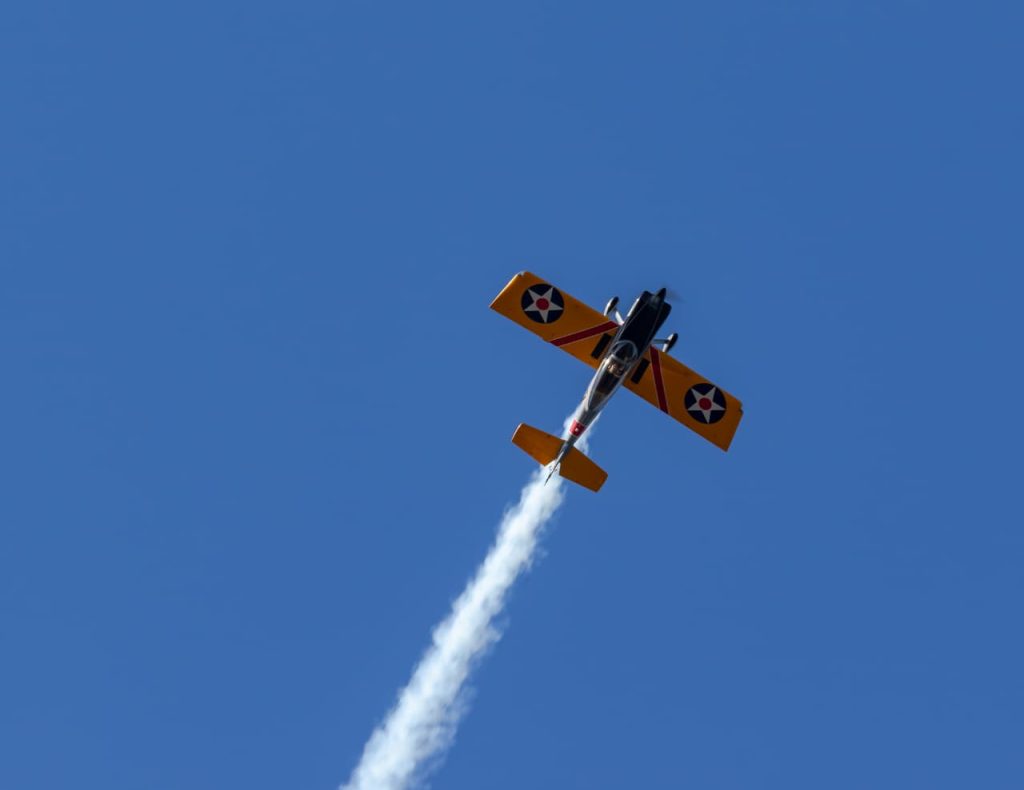
I think there are valuable life and business lessons here. For example, certainly be aware of your competitors but don’t focus on beating them, rather focus on providing the best service or product to your customer. Or don’t focus on trying to be a popular leader, rather focus on helping and inspiring the person in front of you right now.
And most importantly, be the best version you that you can, put everything you have into every moment of your day and don’t worry about how you stack up against others.